
Should We? The Critical Question Behind AI Adoption in Healthcare
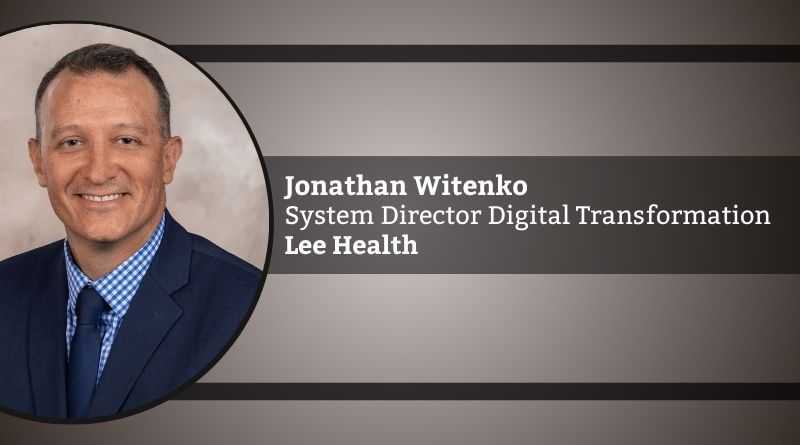
By Jonathan Witenko, System Director Digital Transformation, Lee Health
Henry Ford famously declared, “If I had asked people what they wanted, they would have said faster horses.” In today’s rapidly evolving technological landscape, it’s easy to get caught up in the excitement surrounding artificial intelligence (AI) and its potential to revolutionize various industries. However, it’s crucial to remember that digitizing a bad process won’t necessarily yield positive results. While everyone is at a fever pitch about AI, we must pause and consider the implications of our actions.
Recent Trends in Technology
AI has opened up a world of possibilities, allowing us to do things we never could before. From automating repetitive tasks to enhancing supply chain management and improving information security, the potential applications of AI are vast. However, just because we can implement these technologies doesn’t mean we should do so without careful consideration.
One of the most significant trends in AI is its ability to process and analyze large amounts of data quickly. This capability has led to advancements in predictive analytics, enabling businesses to make more informed decisions. For example, AI can help identify patterns in customer behavior, allowing companies to tailor their marketing strategies more effectively. Additionally, AI-powered chatbots and virtual assistants are becoming increasingly common, providing customers with instant support and improving overall user experience.
The use of AI in supply chain management is another trend. AI can optimize inventory levels, predict demand, and streamline logistics, resulting in cost savings and increased efficiency. However, it’s essential to ensure that these AI-driven processes are built on solid foundations. Digitizing a flawed supply chain process will only exacerbate existing issues and potentially create new ones.
While AI offers exciting opportunities, we must approach its implementation with caution.
Challenges in Adoption
One of the main challenges in adopting AI and other advanced technologies is ensuring that we don’t simply digitize flawed processes. This is why we have established a governance committee with several subcommittees. The governance committee oversees approvals and verifies the validity of concepts. Additionally, subcommittees focus on legal, security, quality review, and ethics. This comprehensive approach ensures that we address all aspects of technology implementation and avoid potential pitfalls.
The governance committee plays a crucial role in evaluating the feasibility and potential impact of AI initiatives. By thoroughly vetting ideas and ensuring they align with organizational goals, we can avoid the pitfalls of implementing technology for technology’s sake. The subcommittees, each with its specific focus, provide additional layers of scrutiny. The legal subcommittee ensures compliance with regulations and addresses any potential legal risks. The security subcommittee focuses on safeguarding data and protecting against cyber threats. The quality review subcommittee assesses the effectiveness and reliability of AI solutions, while the ethics subcommittee considers the broader implications of AI adoption.
Real-World Example
A real-world example of this approach in action occurred when we were asked to digitize a process that was inherently flawed. Everyone in the industry agrees that prior authorization is an unnecessarily complex process that results in delays to patients, health systems and care. The health-care industry tried to digitize the process and make it electronic (ePA), but all this did was add more friction to the process. The real problem to solve is eliminating unnecessary Pas, standardizing criteria, or the bigger move to shift from fee-for-service to value-based-care.
Positive and Negative Impacts
AI can bring about significant positive changes, such as increased efficiency and improved decision-making. AI, for example, can automate monotonous jobs, allowing staff members to concentrate on more strategic endeavors. Increased productivity and job satisfaction may result from this. Additionally, AI can enhance decision-making by providing insights based on data analysis, helping organizations make more informed choices.
However, it’s essential to recognize the potential negative impacts as well. Ethical considerations must be at the forefront of our discussions. Just because AI can enable us to achieve things quickly doesn’t mean we should proceed without evaluating the broader implications. For example, AI-driven automation may lead to job displacement, raising concerns about unemployment and the need for reskilling. Moreover, AI systems can sometimes perpetuate biases present in the data they are trained on, leading to unfair outcomes.
The ethics subcommittee plays a vital role in addressing these concerns. By taking into account the ethical ramifications of adopting AI, we can make sure that the values of accountability, transparency, and justice serve as the foundation for our choices. This involves evaluating the potential impact on various stakeholders and ensuring that AI solutions are designed to benefit society as a whole.
Conclusion
While AI offers exciting opportunities, we must approach its implementation with caution. By establishing a governance committee to address various aspects of technology adoption, we can ensure that we make informed decisions. The big question we must always ask ourselves is not just “Can we?” but “Should we?”
As we move forward in this AI-driven era, it’s essential to strike a balance between innovation and responsibility. By carefully evaluating the potential impact of AI initiatives and ensuring they align with our organizational goals and ethical principles, we can harness the power of AI to drive positive change. Ultimately, the success of AI adoption depends on our ability to make thoughtful, informed decisions that prioritize the well-being of all stakeholders.
Author’s Bio:
Jonathan Witenko began his journey at Lee Health as a teenage volunteer and has since risen through the ranks—from help desk roles to leading Digital Transformation for the organization. Passionate about lifelong learning, he is currently pursuing a Healthcare AI certificate from MIT. Jonathan holds a bachelor’s degree in Computer Science, an MBA, and is a certified Project Management Professional (PMP) and Certified Healthcare Chief Information Officer (CHCIO).
When he’s not leading digital initiatives, raising his five school-aged children, or teaching the next generation as an adjunct professor, Jonathan enjoys exploring the latest technology trends and sharing his insights on the future of IT in healthcare through his podcast, The Digital Health Revolution.