
Why Virtual Reality Training Can Become a Strategic Asset in Dental Education
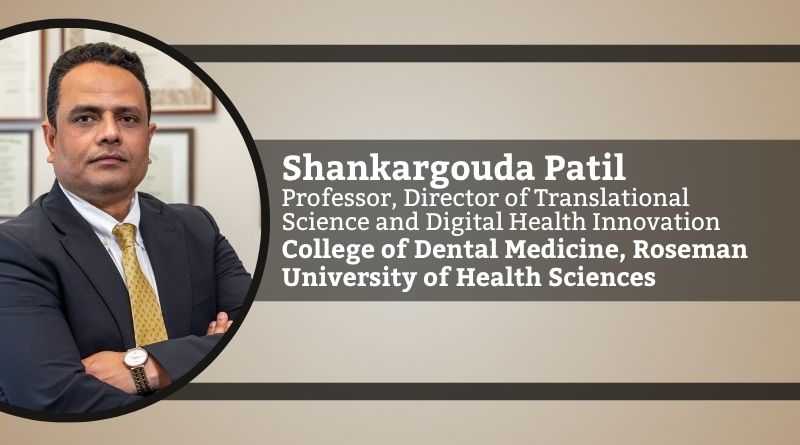
By Shankargouda Patil, BDS, MDS, PhD, FRCPath, FDS RCPS, FICD, FPFA, Professor, Director of Translational Science and Digital Health Innovation|College of Dental Medicine, Roseman University of Health Sciences, South Jordan
The United States has insufficient dentists, and the supply-demand gap is widening. As of 2026, there are approximately 202,485 professionally active dentists in the country.1 This means a ratio of just 59.5 dentists per 100,000 people. Behind that national average lies a more troubling picture. The Health Resources and Services Administration has designated nearly 7,100 dental health professional shortage areas across the country, affecting close to 60 million Americans. Nearly 24.7 million individuals live in “dental deserts”.2 These are areas where access to a dentist is severely limited or nonexistent. These areas are so underserved that patients may need to travel significant distances simply to receive basic care. The demand picture is not improving on its own. The U.S. Bureau of Labor Statistics projects continued employment growth for dentists through 2034. Meanwhile, the existing workforce is aging out: more than 15 percent of active dentists are 65 or older. Retirement rates have been climbing steadily. The ADA’s Health Policy Institute estimates that workforce shortfalls have already caused an 11 percent reduction in dental practice capacity nationwide. By any reasonable measure, the United States needs to train significantly more dentists, and it needs to do so soon.
The response from dental education has been to grow. Enrollment at U.S. dental schools has been edging upward, with new programs being established to expand the pipeline. Yet expansion in student numbers alone does not solve the problem. The infrastructure required to train a dentist is not simply about classroom seats. Clinical training demands patients, operatories, accreditation compliance, and above all, experienced faculty to supervise and mentor students through the long progression from foundational skills to clinical readiness. Full-time faculty vacancies increased by 15 percent between 2014 and 2019, even as enrollment grew. There has been a persistent drain of clinical expertise away from academia and toward private practice due to pecuniary pressures, leaving dental schools struggling to staff programs. How can institutions train more dentists without implausible demands on the faculty, the clinical infrastructure, or the supervisory bandwidth to do it? Could digitalization and virtual reality (VR) learning provide part of the answer and be a strategic asset in dental education?
Structural Variability in Clinical Training
Dental education programs depend on a steady flow of patients, sufficient faculty supervision, and a sufficiently varied case mix to ensure that students encounter the full spectrum of clinical challenges before graduation. In well-resourced programs under stable conditions, these requirements can largely be met. But conditions are rarely stable, and programs are rarely uniform.
To understand the case for VR simulation, it helps to have some background about traditional dental training. Foundational preclinical training is primarily conducted with facsimiles of the oral cavities called typodonts and drilling on plastic teeth, and using phantom heads with mannequins.3 Preclinical training builds foundational motor skills. It provides a controlled environment, allows repetition, and removes the pressure of working on real patients. Its limitations, however, are equally well established: it lacks variability, offers limited feedback from overworked faculty, and bears only an approximate resemblance to the complexity of live clinical work.
The future of immersive simulation lies in augmenting clinical training, not replacing real patients.
Variability in Clinical Exposure
Clinical training follows preclinical training. However, here, students’ clinical experiences vary widely based on patient flow, geography, and circumstance. Economic conditions further influence case mix. Financial constraints drive patients to postpone restorative treatment or opt for extractions because dental care is frequently optional. This shifts clinic populations toward simpler or acute cases, reducing opportunities for students to develop competence in complex procedures. Some students gain extensive experience with complex cases while others do not. This is not a failure of design so much as an inherent feature of an educational model built around live patient care.
The Case for VR as a Strategic Asset
A strategic asset in dental education would increase throughput, generate objective performance data, and reduce early clinical risk. Evaluated against these criteria, virtual reality simulation has a genuine and growing claim to the designation.
Preclinical training requires structured repetition across calibrated levels of difficulty, combined with immediate, objective feedback. A well-designed VR module allows a learner to encounter the same procedural challenge repeatedly. The feedback received helps students to adjust their technique. This helps build motor memory and the decision-making frameworks that clinical work demands, before a real patient is involved. A typodont or plastic teeth offers the same physical challenge every time. A VR environment can systematically vary the presentation, introduce complications, escalate difficulty, and respond differently to different choices. And it can record all of it.
Evidence from research with dental students
A study on a group of undergraduate dental students trained using VR demonstrated significantly greater overall improvement in cavity preparation. After four hours of practice on plastic teeth, further repetition produced no statistically significant improvement. The VR group, by contrast, continued to improve across all nine criteria in the second phase of training. Critically, the students’ critical error rates and failures continued to fall in the VR group throughout training. Conventional training is vulnerable to a form of arrested development once the initial learning curve flattens; VR breaks through that ceiling by providing continuous, step-by-step feedback.4
VR’s embedded objective metrics can provide a greater sense of transparency. When students were asked directly about their experience, every single participant identified conventional phantom head assessment as potentially subjective. Two tutors evaluating the same preparation could reach different grades. Recording objective metrics in the VR system provides a greater sense of evaluative fairness and transparency.5
For educators, this framing offers curricular predictability. The VR platform can generate continuous, longitudinal performance data: instrument stability metrics, time-to-completion trends, error patterns, recovery behaviors, and decision pathways. Across a cohort, this data becomes a powerful tool for identifying who is ready to advance and who needs additional support.
The strongest VR modules combine branching clinical decision logic with motor execution tasks and reflective feedback loops. They do not merely test whether a learner can complete a task correctly; they create conditions in which a learner encounters partial failure, must interpret what went wrong, and must adjust. This kind of structured safe failure is ethically impossible to orchestrate in a real clinical setting, but is educationally essential. Simulation makes it possible. In Saudi Arabia, novice dental students used a VR dental trainer to practice manual dexterity exercises independently without faculty supervision. With improved cavity preparation and a 30% faster completion time, overall skill acquisition increased. The improvement in time efficiency means that students who advance to the phantom head stage are faster and more precise, placing less demand on the faculty and resources.6
A separate study tracked how preclinical dental students improved through repeated simulator exposure alone. The results were consistent with the broader literature: drill time decreased across sessions even in complex procedures.7 Even students with no prior gaming or VR experience performed as well as those who had more digital familiarity. Students reported that simulator use improved their interest in operative dentistry, their perception of manual force application, and their three-dimensional understanding of cavity form, and unanimously said they wanted more simulator hours. The researchers drew a pointed comparison with aviation training, where logged simulator hours carry formal recognition alongside real flight time.7 Maybe it’s time for dental education to adopt a similar approach, where simulation hours are officially tallied, gradually organized, and linked to quantifiable performance standards.
Patient Safety
Across all the educational and operational arguments for immersive simulation, the most universally compelling is patient safety. Simulation addresses this by making errors safe. A student who miscalculates an access preparation in a VR environment learns from that mistake without causing harm. Complication chains can be scripted and rehearsed. Improper procedural sequencing can be identified and corrected before it reaches the patient.
VR: Better prepared
Simulation cannot eliminate all clinical risk. It does not. But it creates conditions under which a learner’s first encounters with many types of clinical challenge occur in an environment where mistakes are instructive rather than harmful. Real patient encounters remain irreplaceable. The communication required to build trust with an anxious patient, the consent process, the unpredictable variability of living tissue, the emotional and ethical dimensions of care – none of these can be replicated in a simulation environment. Because of this, when students start treating actual patients, they are using previously acquired abilities rather than acquiring them for the first time.
Clinical training is not optional. But when real-world exposure becomes inconsistent or constrained, educational systems need mechanisms capable of compensating. This is where VR simulation shifts from a supplementary resource to something more fundamental. Immersive simulation will not replace real patients. It should not attempt to. Its value lies precisely in what it can do before those patient encounters occur: ensure that learners arrive at the clinical encounter with a verified foundation of procedural and decision-making competence, rather than developing that foundation through the encounter itself. The institutions best positioned to serve their students, their patients, and the dental workforce of the coming decade are those that recognize simulation not as a technology investment but as an educational one.
References:
1. Dentist Workforce | American Dental Association https://www.ada.org/resources/research/health-policy-institute/dentist-workforce (accessed Mar 3, 2026).
2. Rahman MS, Blossom JC, Kawachi I, Tipirneni R, Elani HW. Dental Clinic Deserts in the US: Spatial Accessibility Analysis. JAMA Netw open 2024;7(12):e2451625, DOI: 10.1001/jamanetworkopen.2024.51625.
3. Fugill M. Defining the Purpose of Phantom Head. Eur J Dent Educ 2013;17(1):e1–e4.
4. Heidaridarani MM, Farzaneh F, Rezvani G, Ahmady S, Ardakani FD, Mahrooz MH. Effect of a Virtual Reality Simulator for Preclinical Instruction of Operative Dentistry on Level of Competence of Undergraduate Dental Students. BMC Med Educ 2025;25(1):1453, DOI: 10.1186/s12909-025-08045-2.
5. Rodrigues P, Nicolau F, Norte M, Zorzal E, Botelho J, Machado V, Proença L, Alves R, Zagalo C, Lopes DS, Mendes JJ. Preclinical Dental Students Self-Assessment of an Improved Operative Dentistry Virtual Reality Simulator with Haptic Feedback. Sci Rep 2023;13(1):1–11, DOI: 10.1038/s41598-023-29537-5.
6. Farag A, Hashem D. Impact of the Haptic Virtual Reality Simulator on Dental Students’ Psychomotor Skills in Preclinical Operative Dentistry. Clin Pract 2021;12(1):17–26, DOI: 10.3390/clinpract12010003.
7. Rodrigues P, Nicolau F, Norte M, Zorzal E, Botelho J, Machado V, Proença L, Alves R, Zagalo C, Lopes DS, Mendes JJ. Preclinical Dental Students Self-Assessment of an Improved Operative Dentistry Virtual Reality Simulator with Haptic Feedback. Sci Rep 2023;13(1):2823, DOI: 10.1038/s41598-023-29537-5.