
In Rural Healthcare, AI Has to Earn Its Place
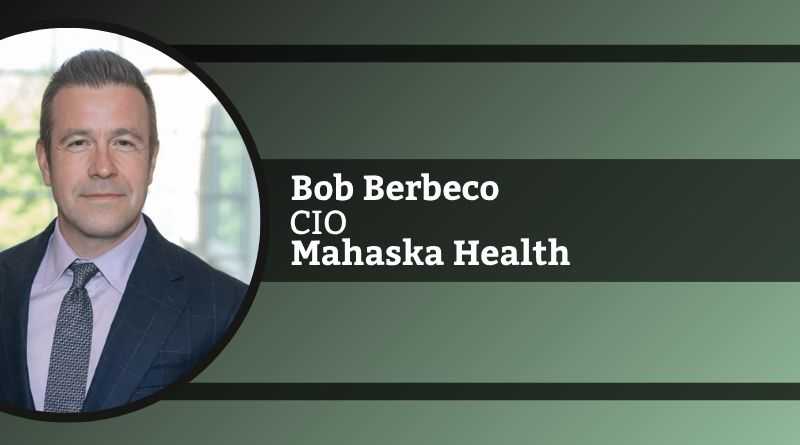
By Bob Berbeco, Chief Information Officer, Mahaska Health
The demonstration was impressive. An AI assistant listened to a patient encounter, generated the clinical note, and integrated the documentation into the EHR in seconds. The vendor promised improved efficiency, less burden on physicians and clinicians, and a rapid return on investment. For a small hospital under constant operational pressure, it sounded like exactly the right solution.
But in my mind, harder questions emerged. What problem are we truly solving? How will the tool fit into existing workflows? How will success be measured? And what operational changes are required to ensure the promised benefits become reality?
After nearly three decades in healthcare technology, I’ve learned to ask those questions before calling anything transformational. That doesn’t mean resisting innovation. It means being deliberate about it, especially in rural healthcare, where I work. We face many of the same clinical, regulatory, cybersecurity, and technology demands as much larger health systems, but with fewer people and more limited resources.
We can’t adopt artificial intelligence just because it’s got sizzle and buzz. AI has to earn its place in our technology stack. Whether it frees up time for those who support and care for our patients is the most obvious indicator of its worth.
Begin with the Gemba
The wrong place to begin an AI strategy is a list of technology solutions and available products. The right place is the Gemba, a.k.a. source, the actual place where the work happens. That’s where problems become visible. You might find physicians spending time on non-clinical tasks, staffing struggling to find information across disconnected systems, or patients experiencing delays that could be avoided.
At Mahaska Health, these questions shape how we think about AI and digital transformation. Opportunities like ambient clinical documentation, patient-friendly visit summaries, no-show prediction, digital front-door triage, contact-center assistance, denial forecasting, and predictive staffing are compelling because they connect to problems we recognize. The goal isn’t to show off how advanced technology is. It’s to produce practical value by reducing administrative and operational friction.
If ambient documentation lets a physician focus on the patient instead of the computer, that matters. If better forecasting helps a department align staffing with demand, that matters. It matters if technology enables a patient to receive a more comprehensive response more quickly. The result, not the methodology, is what matters.
In rural Healthcare, innovation isn’t about chasing what’s next. AI earns its place by applying technology thoughtfully in service of patients, physicians, clinicians, team members, and the communities that depend on us.
Workflow Determines Whether AI Succeeds
Healthcare organizations already operate in a crowded technology environment. Any AI investment should reduce complexity, not create another application to monitor, another inbox to manage, or another alert competing for attention.
An AI tool can perform exactly as designed and still fail if it doesn’t fit the workflow. That’s why successful adoption takes more than technical implementation. It requires technology teams to round with team members, physicians, and clinicians, watch how work actually gets done, and listen with a beginner’s mind. The process described in a meeting room is not always the process experienced at the bedside, in a clinic, or at a scheduling desk.
This is where partnership matters, too. AI can’t be treated as an IT initiative handed down to the organization. Clinical, operational, financial, compliance, cybersecurity, and technology leaders all have a role in deciding where it belongs and how it should be used. Frontline team members need to be involved early enough to shape the solution, not just trained after the decisions are already made, because implementation and adoption are not interchangeable. Implementation is complete when the technology is installed. Adoption happens when people see that it actually helps them work better.
Move From Excitement to Accountability
The number of AI pilots underway is an easy metric to report, but it tells you very little about whether an organization is creating value. Every initiative should start with a clearly defined problem, an accountable owner, and an agreed-upon measure of success. Success should be validated by showing that it reduced documentation time, improved the provider or
patient experience, shortened a process, cut avoidable work, or improved the quality of a decision.
Not every pilot will produce the expected result. That’s part of innovation. But responsible experimentation requires the discipline to learn quickly, adjust when needed, and stop when the value isn’t there.
In a rural health system, disciplined prioritization is essential. We don’t have unlimited resources to spread across dozens of interesting possibilities. A big list of unrelated experiments will not produce as much value as a smaller number of well-managed projects linked to actual business priorities. AI shouldn’t be measured by how much of it we deploy. It should be measured by how much meaningful work it improves.
Build the Foundation Before Scaling
A solid foundation of reliable data, shared definitions, governance, cybersecurity, and clear decision rights is critical for AI adoption. Without them, AI can produce answers faster, but they might not be useful or trustworthy.
Human oversight remains critical, or as we say, we must keep the human in the loop. AI can generate incorrect or incomplete information with remarkable confidence. It may exhibit bias in its statistics and persuade people to accept a response only because it seems authoritative. Especially in healthcare, the risks shouldn’t be addressed with a policy written after implementation. They have to be included from the beginning of the design.
Healthcare organizations need to understand what information a solution uses, where that information goes, who can access it, and how the solution is monitored. Leaders need clear accountability for reviewing output, responding to errors, and evaluating performance over time.
Cybersecurity must also be hardened within the foundation. Innovation and security are sometimes framed as competing priorities. In reality, they deserve equal weight as responsible security is what makes sustainable innovation possible. Patients will accept new uses of technology if we can be responsible stewards of their information.
Preserve What Matters Most
The greatest promise of AI in healthcare isn’t that it can remove people from the work. It’s that it can remove the work that keeps people from one another.
Healthcare will always depend on judgment, empathy, communication, and trust. A physician or clinician sensing that something isn’t right, a team member taking extra time to help a patient navigate care, a leader listening to the people closest to a problem: none of that can be reduced to an algorithm. Our goal should be to give people more capacity for those moments.
AI will keep evolving, and capabilities that seem experimental today will eventually become routine. The organizations that benefit most won’t necessarily be the ones that adopt the most technology or move the fastest. They’ll be the ones that stay clear about the problems they’re solving, build the right foundations, involve their people, and measure outcomes honestly.
In rural healthcare, innovation isn’t about chasing what’s next. AI earns its place by applying technology thoughtfully in service of patients, physicians, clinicians, team members, and the communities that depend on us. Since there will always be another technology around the corner, our job is to make sure it delivers more than a compelling demonstration.