
Beyond the Hype: Driving Equity and Governance through Educational AI
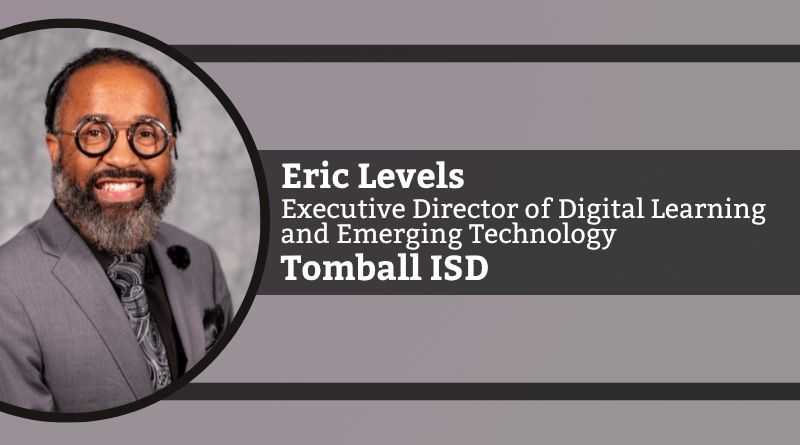
By Eric Levels, Ph.D., CETL, Executive Director of Digital Learning and Emerging Technology, Tomball ISD
The rapid evolution of Artificial Intelligence (AI) has presented modern school districts with a critical choice: meet the wave with apprehension, or confront it with an empowered, proactive strategy. In Tomball ISD, we chose the latter. We believe that information technology should never be a luxury or a passive pastime; instead, it must serve as a fundamental bridge to educational equity. By moving student learning away from passive consumption and toward active exploration, we are fundamentally redefining the boundaries of the traditional K-12 classroom.
In the 2026 educational landscape, AI is no longer a futuristic concept, it is the engine driving industry-wide transformation. Here is how we built a future-ready ecosystem in Tomball ISD, the challenges we conquered along the way, and the broader impacts of these emerging technologies on our community.
The Tomball Blueprint: AI Use in K-12 Education
Our approach to AI integration centers on “precision integration” selecting specific, high-impact tools to close core academic gaps while scaling innovation equitably across the district. We recognized early on that foundational literacy and writing are the gatekeepers to all subsequent learning. To support our educators and students, we deployed targeted, intelligent platforms directly into our instructional delivery.
By balancing foundational AI interventions with visionary, regional collaboration, Tomball ISD has proven that school districts do not have to operate in a vacuum.
1. Personalized Learning at Scale
In our 5th-grade classrooms, we rolled out Amira (HMH), an AI-powered reading assistant. Utilizing speech recognition and sophisticated algorithms, Amira acts as a 1:1 oral reading tutor. It provides real-time, non-judgmental feedback to individual readers, allowing our teachers to pivot away from administrative tracking and focus deeply on small-group dynamics.
For our 7th and 8th graders, we instituted NoRedInk to build writing stamina and master complex grammar. The platform dynamically tailors exercises to individual students’ interests, shifting the grading paradigm from a subjective model to a data-driven model of mastery. Under the leadership of our Superintendent, Dr. Martha Salazar-Zamora, Tomball boldly forged ahead, piloting AI programs such as PowerBuddy, Claude, MagicSchool, Gemini, ChatGPT, and Brisk Teaching, putting cutting-edge instructional tools directly into the hands of our staff to receive their feedback for the best instructional delivery and outcomes.
2. TRAINS and Community Fluency
True transformation requires building capacity beyond the classroom walls. To achieve this, I created TRAINS (Tomball’s Roundtable for Artificial Intelligence Networking Symposium). On December 5, 2025, we hosted our 2nd Annual TRAINS event, themed “An All-Aboard Experience in the Future of Educational AI”. TRAINS was designed not merely as a professional development event, but as a deliberate community-building exercise to align stakeholders and regional leaders under a safe space of inquiry and a shared vision of digital literacy. The symposium functioned as a lateral networking hub, hosting over 130 participants from 36 different school districts and education companies. We want to develop a clear pedagogical roadmap from K–12 straight into higher education by obtaining presentations from Tier 1 universities like Rice University and Lone Star College.
Navigating the Hurdles: On-Premises Adoption Challenges
Deploying these technologies at our premises was far from a frictionless endeavor. Innovation often breeds anxiety, and we encountered several distinct organizational and logistical challenges during implementation:
- The Policy Vacuum: When we began expanding our AI footprint, the State of Texas had not yet issued formal guidance on AI governance in public schools. Operating in a legal and ethical ambiguity risked exposing student data or causing community panic. To solve this, we proactively drafted and secured an officially Board-approved AI policy, making Tomball ISD one of the first in the state to formalize AI usage guidelines. This established a secure, legally sanctioned “sandbox” for our teachers to innovate without fear.
- Combating Teacher Burnout: Introducing new tech platforms can easily overwhelm an already burdened workforce. If tools are simply “turned on” without intensive support, they become shelfware. We mitigated this by utilizing a “High-Touch Coaching” model. Our Digital Learning Specialists physically entered classrooms to model AI integration, ensuring teachers understood how AI could streamline planning and reduce administrative tasks rather than adding to their workloads. We also created an AI Literacy course for practical principles and practices to consider when using any AI tools.
- The Digital Divide at Home: We quickly realized that if parents did not understand AI, resistance would fester. To bridge this gap, our Digital Learning Department developed proprietary, in-house AI courses tailored specifically for families. Alongside these courses, we launched Parent University Informational Sessions to explicitly address data privacy and digital citizenship, converting potential tech-anxiety into informed tech-advocacy.
Positive and Negative Impacts of Emerging Technology
As we look across the broader horizon of educational technology, including our parallel rollouts of Augmented Reality (AR) Merge Cubes in intermediate science and high-fidelity Virtual Reality (VR) headsets in 7th-grade Career Technical Education (CTE), the impacts are profoundly dual-sided.
Positive Impacts: Equity and Exploration
- Unprecedented Personalization: AI intervention tools like Amira provide daily, individualized oral reading fluency sessions for every student in the intervention tier. This level of 1:1 support is physically impossible under traditional staffing models.
- Equalizing Accessibility: Immersive technologies like AR and VR turn abstract concepts into tangible experiences. Visual and kinesthetic learners who struggle with text-heavy curricula can now manipulate 3D digital twins of biological structures or virtually step into high-voltage electrical environments and surgical suites. This provides low-stakes, safe career exploration that levels the playing field for all students.
- Reverse-Mentorship and Student Voice: By centering student experiences, such as our groundbreaking student panels from our collective High Schools at our TRAINS symposium, we have allowed decision-makers to learn directly from our digitally native students.
Negative Impacts and Mitigations
- Data Privacy Vulnerabilities: Unregulated generative AI use poses real risks regarding the exposure of confidential student records and intellectual property. Without our proactive Board-approved policy, these tools could easily compromise data integrity.
- The Risk of Isolated Pockets: Left unchecked, emerging technology naturally aggregates in classrooms with tech-savvy teachers, worsening educational inequity. Our district-wide standardized rollouts ensure that these benefits are distributed equitably across all campuses.
- The Question of Screen Time: There is a constant danger of replacing meaningful human instruction with passive screen time. We strictly ban “passive screen time”—such as unsupervised use, gaming, or social media, across all grade levels. To mitigate this risk, we mandate “active engagement” with strict, age-appropriate limits. With the support of State Board-approved IMRA materials and Digital Insights monitoring, we make sure that technology is only utilized as a teacher-led tool for active creativity and study rather than passive consumption.
Destination Innovation
The true measure of IT leadership in public education is not the number of gadgets scattered across a campus; it is the depth of the community’s collective fluency. By balancing foundational AI interventions with visionary, regional collaboration, Tomball ISD has proven that school districts do not have to operate in a vacuum. We have built a sustainable, boundary-less ecosystem where our teachers are more efficient, our parents are deeply informed, and our students are thoroughly equipped to pioneer the landscape of 2026 and beyond.
Bio:
Dr. Eric Levels serves as the Executive Director of Digital Learning and Emerging Technology for Tomball ISD. With over 15 years of experience in the educational technology space, he is actively redefining the boundaries of the traditional K-12 classroom. Characterized by a “future-ready” mindset, Dr. Levels champions information technologies that shift student learning from passive consumption to active, immersive exploration. He approaches technology implementation through a strategy of “precision integration,” selecting specific, high-impact tools to close core academic gaps and serve as a fundamental bridge to educational equity.
Throughout his tenure, Dr. Levels has spearheaded several transformative digital initiatives across the district. In intermediate school science, he directed the deployment of Augmented Reality (AR) tools and tablet overlays to make abstract concepts tangible for visual and kinesthetic learners. For the Career Technical Education (CTE) curriculum, he successfully scaled high-fidelity Virtual Reality (VR) headsets district-wide, providing 7th-grade students with safe, low-stakes, and immersive “work-based experiences” and career exploration in advanced manufacturing and surgical environments.
Dr. Levels is also a prominent regional leader in educational Artificial Intelligence (AI) governance and pedagogy. He is the architect and creator of TRAINS (Tomball’s Roundtable for Artificial Intelligence Networking Symposium), a significant regional milestone that unites educators, industry partners, and higher education institutions—such as Rice University and Lone Star College—to collaborate and discuss responsible AI usage. Under his proactive guidance, Tomball ISD became one of the first school districts in the state of Texas to secure an officially board-approved AI policy, establishing a safe, ethical, and legally sanctioned “sandbox” for classroom innovation well ahead of state-level guidance.
Dedicated to building a sustainable ecosystem of digital literacy, Dr. Levels has driven the implementation of targeted AI intervention platforms to provide personalized student support while actively endeavoring to reduce teacher burnout. To ensure the broader community is aligned with these rapid technological shifts, he led the development of custom, in-house AI courses for students, staff, and families, and hosted Parent University Informational Sessions with his dynamic Digital Learning Specialists to champion data privacy and digital preparedness. Through this comprehensive, collaborative approach, Dr. Levels continues to ensure that Tomball ISD remains at the forefront of educational innovation.