
Beyond Procurement: Building Effective Vendor Relationships in Government
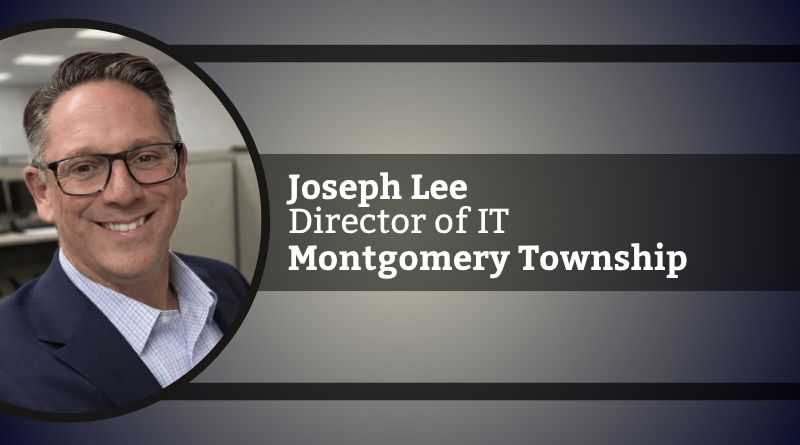
By Joseph Lee, Director of IT, Montgomery Township
As government agencies deal with rapid digital transformation, the rise of a strategic technology leader has developed. The technology leadership role has evolved from a primarily operational position into a strategic leadership role that is central to policy execution, cybersecurity, and public service innovation.
Today’s Governmental CIO is creating a less IT centric environment and creating a more IT services centric environment. The Governmental CIO is now being tasked with improving the overall landscape for the full organization and not just supporting the technology.
As the landscape has shifted, so have the requirements and qualifications for the role. As per CIO.GOV, the CIO’s responsibilities fall into 8 categories:
- Leadership and accountability
- Strategic planning
- Workforce
- Budgeting
- Investment management
- Information security and privacy
- Architecture
- Information Resources and Data
With each of these categories comes its own level of work, albeit, jobs within the job. This does not mean the CIO will be hiring staff to be able to do each job within the job, but rather has to
implement tools to efficiently and seamlessly provide the services needed to support the organization. Enter the vendor.
Vendors are everywhere and everyone has something to sell, like the shiny new toy, which at the time of this article is AI. It is amazing how many times AI is used in most conversations about products right now. But how do we know which vendor we should work with? How do we know if our current vendors are still sufficient?
To the vendors reading this article, take the time to understand the needs. Working within the governmental space, decisions are made based on many factors that are different from those of private sector CIOs.
Government agencies in the United States follow procurement statutes that regulate the acquisition of goods and services, typically requiring competitive bid processes or the use of government contracts that have been pre-approved to purchase to ensure transparency, competition, and accountability with the use of public funds. (Brown & Potoski, 2003; Harland et al., 2021; Casady et al., 2023). Although having approved vendors at times makes it easier to purchase products, how do you choose between them?
Dealing with vendors is a delicate balance. You ultimately have a short window, due to a need that you are trying to fill, to make a decision whether you will use them, or will they be a vendor relationship or a vendor partnership going forward? But what’s the difference and how does this affect the Governmental CIO?
All vendor partnerships are vendor relationships, but not all vendor relationships are vendor partnerships.
Any interaction between the organization and the vendor that provides goods or services is the basis for the vendor relationship. Companies like W.B. Mason provide office supplies when needed. However, so does a company like Staples. During procurement, price and availability come into play. We are not tied to these two vendors and can look at other options if need be. Ultimately, the relationship is very transactional.
Once we have established the relationship, this is when we start to move into a vendor partnership; this is where the Governmental CIO has to excel. We start looking at long term, collaborative and strategic planning, for example, Microsoft vs Google or CrowdStrike vs. SentinelOne. These are organizations that you move forward with long term. You work with them on the needs of your organization and invest time and money into getting the most out of them while fulfilling the needs of the organization. Thus, helping the Governmental CIO create efficiencies and alleviate some of those jobs within the jobs we spoke about earlier.
Choosing the right vendor to form that partnership is similar to life. You need to have trust, honesty and open communication. If any of those break down, we become reluctant to move forward or continue the relationship/partnership.
As a new manager in an organization, many years ago, I started using a vendor for support and various projects. They were professional, went above and beyond to make sure we were pleased and overall, a real partnership. Now, unfortunately, I have not used that company in quite a while, not because they did anything wrong, but other organizations I went to had established partnerships that I continued. As I recently entered a new position in a new industry, I needed a small network cabling job to be done (priority job as per my new boss) and engaged with the organization’s current vendor. Unbeknownst to me, they subcontracted this work to a vendor I used 15 years ago.
Based on my experience with them previously, once the gentleman walked in, it was like no time had passed. The professionalism, the attention to detail and I was immediately set at ease. This vendor made me look good. I didn’t have to worry about them, I didn’t have to feel like I needed to micro-manage them, I was able to get work completed without any additional stress, ultimately completing a project at a reasonable cost with no impact to existing staff.
This vendor listened, understood, and completed the tasks that were asked of them. This is exactly what the expectations are for a Governmental CIO when hiring a vendor: making my job(s) easier, which isn’t always the case.
To the vendors reading this article, take the time to understand the needs. Working within the governmental space, decisions are made based on many factors that are different from those of private sector CIOs. We deal with state and federal regulations. We have defined purchasing structures. We don’t generate revenue, so our budgets have constraints. We look to streamline and provide services to the public vs selling them services.
The crucial component is taking the time to listen to the demands and, in the end, offering support and remedies to help lessen the jobs inside the jobs environment. My job is to navigate and create the best efficiencies I can with the limited resources I have and if you can provide me with solutions to my actual problems and needs and not try to sell me something you think I need, we will have a long lasting relationship and partnership because ultimately, I will be able to balance everything I need to do and feel like I am being supported.