
Principles for Safe Autonomous-Agent Operation for Better AI Governance
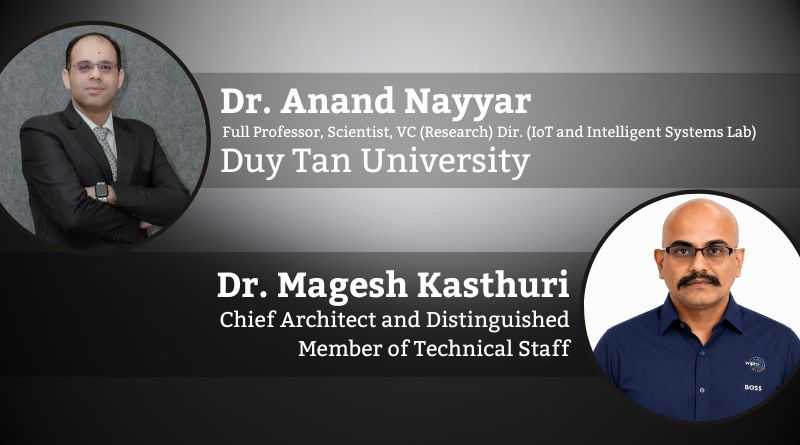
By Dr. Anand Nayyar, Full Professor, Scientist, Vice-Chairman (Research) and Director (IoT and Intelligent Systems Lab), Duy Tan University and Dr. Magesh Kasthuri, Chief Architect and Distinguished Member of Technical Staff
Autonomous agents are quickly moving from controlled demonstrations into real operational environments. They can watch dashboards, classify alerts, open or enrich tickets, recommend remediation steps, trigger runbooks, and even coordinate across tools. That promise is real, but so is the risk. When an agent is allowed to act in production, the conversation can no longer be limited to model accuracy alone. Governance must extend to the runtime environment, the decision boundaries, the escalation model, the audit trail, and the conditions under which a human must step in. In practical terms, safe autonomous-agent operation means designing systems that are useful at scale without becoming opaque, brittle, or dangerous. Current governance thinking increasingly emphasizes risk-based oversight, continuous monitoring, auditability, and human control as essential design requirements rather than optional afterthoughts. These ideas are strongly reflected in governance approaches such as the NIST AI Risk Management Framework and ISO/IEC 42001, both of which emphasize accountability, traceability, and operational controls across the AI lifecycle.
Why Safe Agent Operation Matters
Many enterprise failures involving AI are not caused by a model suddenly becoming unusable. They happen because the surrounding system allows the model to act with too much freedom, too little supervision, or too little evidence. An agent who updates an incident ticket incorrectly may only create noise. An agent that suppresses a critical alert, restarts the wrong service, or sends a misleading customer update can create outages, compliance exposure, and loss of trust. This is why safe operation must be treated as a systems discipline. The model is only one component. The rest of the safety posture comes from policy controls, role-based permissions, structured escalation, real-time observability, independent verification, rollback capability, and clearly defined limits on what the agent can do on its own. Industry discussions on Human out of the loop (HOOTL) and production oversight increasingly stress that supervision is a property of the operating system around the agent, not merely a matter of asking a person to approve something at the end.
Principles for Safe Autonomous-Agent Operation
- Clear accountability must exist before autonomy is granted. Every agent should have a named business owner, an operational owner, and a control owner. The business owner defines acceptable outcomes. The operational owner ensures the workflow actually works in production. The control owner defines guardrails, approval paths, and audit expectations. Without clear ownership, failures become difficult to investigate and even harder to correct.
- Autonomy should always be bounded. Agents should operate only within a declared scope. That scope includes allowed tools, allowed data sources, permitted action types, time windows, confidence thresholds, and financial or operational blast-radius limits. A monitoring agent may be allowed to correlate alerts and recommend a remediation sequence, but not change firewall rules or shut down production workloads unless those actions are explicitly permitted. Bounded autonomy is what separates controlled automation from unmanaged experimentation.
- Observability is not optional. If an agent can act, it must be observable. Teams should be able to see what the agent saw, which tools it called, which reasoning path or decision policy it followed, what evidence it used, and what action it attempted. Agent observability is increasingly treated as the operational backbone of governance because it allows teams to measure effectiveness and detect drift, misuse, or unsafe behavior in real time.
- High-impact actions need independent verification. The same agent that proposes an action should not be the sole authority to approve it. For production changes, policy exceptions, customer-impacting communications, or privileged access workflows, a separate verification layer should confirm whether the proposed action is within policy, supported by evidence, and safe to execute. This verification can be automated for low-risk cases and human-driven for sensitive cases.
- Override and rollback paths must be immediate. If an agent begins acting unsafely, authorized humans should be able to quickly pause, redirect, or stop it. Just as important, reversible actions should be designed to support rollback or compensation. A good operational pattern is to make low-risk actions automatic, high-risk actions interruptible, and irreversible actions rare by design. Production guidance on autonomous agents consistently highlights rollback, auditable intervention, and test-before-run discipline as core safety controls.
- Least privilege should govern every agent. Agents do not need broad access simply because they are useful. Permissions should be narrow, time-bound, and tied to a specific purpose. Separate agents for monitoring, ticket triage, knowledge retrieval, and remediation should not automatically share the same privileges. Segmentation reduces the blast radius of error and makes investigations much easier.
- Human oversight should be designed as a spectrum, not a binary choice. Not every workflow needs the same level of human involvement. A mature governance program deliberately chooses between Human-in-the-Loop (HITL), Human-on-the-Loop (HOTL), Human-out-of-the-Loop (HOOTL), and Human-in-the-Loop for Exceptions (HITLFE) based on risk, reversibility, latency, business impact, and model maturity. The strongest operating model is usually not permanent HITL for everything, but a staged path from tighter control toward selective autonomy as evidence and trust accumulate. Recent guidance on human oversight in agentic systems makes this point clearly: the goal is controlled autonomy, not paperwork theater that slows the process without reducing risk.
Understanding HITL, HOTL, HOOTL, and HITLFE
Human-in-the-Loop (HITL) means the agent cannot complete a defined decision or action until a person reviews and approves it. This is the most conservative oversight pattern. It is well suited to situations where the cost of a wrong action is high, where policy interpretation is nuanced, or where the organization is still learning how the agent behaves in production. HITL is especially useful during early rollout, pilot stages, and sensitive workflows such as approving customer communications, changing production configurations, or resolving high-severity incidents. The drawback is obvious: if overused, it creates delay, review fatigue, and false confidence that a human sign-off always catches errors.
Human-on-the-Loop (HOTL) allows the agent to act autonomously while people supervise the process, monitor outcomes, and intervene when needed. This model is useful when speed matters and most cases are routine, but the organization still wants a human nearby with veto power. In operations, HOTL works well for alert triage, enrichment, runbook selection, ticket prioritization, and repetitive support workflows where manual approval of each step would be too slow. The governance challenge here is attention decay. Operators who merely watch systems all day can become complacent, delay intervention, or start trusting the system too easily. Effective HOTL, therefore, depends on high-quality monitoring, strong alert design, and clear escalation playbooks.
Human-out-of-the-Loop (HOOTL) refers to a fully autonomous operating posture in which the agent runs within predefined boundaries and does not require human involvement during routine execution. This model should be reserved for low-risk, well-tested, and highly reversible tasks. In an operations setting, examples might include deduplicating alerts, attaching knowledge articles to known incident types, restarting a noncritical stateless service under narrow conditions, or auto-scaling compute resources within approved policies. HOOTL is powerful because it removes latency, but it also demands the strongest guardrails. Safe HOOTL depends on auditable actions, policy boundaries, independent verification, rapid override channels, and robust input defenses.
Human-in-the-Loop for Exceptions (HITLFE) is often the most practical model for enterprise agentic AI. Here, routine and well-understood cases are handled automatically, but unusual, low-confidence, high-risk, or policy-sensitive cases are escalated to a human. This pattern preserves the speed benefits of automation without forcing people to approve every trivial action. In effect, the agent is trusted for the ordinary path but not for ambiguous or exceptional situations. For operations teams, this is often the sweet spot because incident queues contain a mix of repetitive known issues and unpredictable edge cases. HITLFE allows the system to absorb the routine workload while preserving human judgment for the moments that actually require it.
Real-Time Operations Examples from Monitoring and L1/L2 Support
Consider a large enterprise operations center that monitors application health, infrastructure telemetry, API latency, database performance, and security events across several production systems. Thousands of alerts can arrive in a day, but only a portion of them require immediate action. An autonomous monitoring agent can correlate alerts, suppress duplicates, enrich incidents with logs and topology context, identify probable root causes, and recommend a next step. The question is not whether the agent can do these things. The real question is when it should be allowed to act alone and when a person should stay involved.
Example 1: HITL in a high-severity incident bridge. Imagine the agent detects a sudden spike in payment API failures during peak hours. It analyzes traces, compares current metrics with historical baselines, and concludes that a recent configuration drift in a dependent service is the likely cause. It prepares a rollback recommendation and drafts a customer-impact summary. Under HITL, the agent cannot execute the rollback or send updates on its own. A human incident commander reviews the evidence, checks whether the diagnosis is credible, confirms whether a rollback is safe, and then approves the next step. This design is appropriate because the business impact is immediate and a mistaken rollback could worsen the outage. The human remains directly responsible for the final call, while the agent accelerates diagnosis and documentation.
Example 2: HOTL in L1 alert triage. Now consider the L1 support queue, where the majority of alerts are repetitive. The agent classifies incidents, attaches likely runbooks, enriches tickets with dependency maps, groups duplicate alerts, and auto-assigns severity based on policy. It may even execute harmless diagnostics such as ping checks, log retrieval, or configuration comparison. Human operators watch dashboards that show queue trends, unusual spikes, or actions taken by the agent. They do not approve every enrichment step, but they can stop the agent, re-route a ticket, or escalate to L2 if something looks wrong. This is an effective HOTL pattern because it preserves speed while keeping human supervision available for anomalies and edge cases.
Example 3: HOOTL for reversible routine remediation. Suppose an application occasionally experiences a memory leak in a noncritical worker service. The failure pattern is well known, the remediation is straightforward, and the restart has no customer-facing impact because the workload is stateless and redundant. The agent watches resource metrics, detects the known signature, drains the instance, restarts the service, confirms recovery, and writes the full action trail into the incident system. No person approves the action in real time. This is a valid HOOTL use case because the decision boundary is narrow, the action is reversible, the evidence is measurable, and the blast radius is limited. The safety is provided by guardrails and evidence, not by a human clicking approve.
Example 4: HITLFE for L2 support and exception handling. In a mature support environment, the agent can resolve standard incidents automatically, such as unlocking routine service accounts, restarting batch jobs that failed for known reasons, or resolving disk-space alerts through approved cleanup procedures. However, if the confidence score falls below a threshold, if the pattern does not match known incidents, if the affected system is business critical, or if a proposed action touches privileged assets, the workflow pauses and routes the case to an L2 engineer. The engineer sees the agent’s evidence, the reason for escalation, and the proposed action. This model keeps the human focused where expertise adds the most value. It also reduces queue fatigue because people are not asked to review predictable cases that the system already handles reliably.
The future of agentic AI in enterprise operations will not be determined only by how intelligent the agents become. It will be determined by how responsibly they are deployed, supervised, measured, and constrained.
Comparison Table: Purpose of HITL, HOTL, HOOTL, and HITLFE
| Model | Primary Purpose | When to Use | Operational Example | Main Advantage | Main Limitation |
| HITL | Keep direct human control over consequential decisions before execution | High-risk, high-impact, policy-sensitive, or early-stage deployment | Approving rollback during a Sev-1 incident or validating a customer-impact communication | Strong accountability and risk control | Higher latency, review fatigue, and poor scalability if used too broadly |
| HOTL | Allow autonomous execution while retaining human supervisory control | Medium-risk, high-volume workflows where speed matters but oversight remains necessary | L1 triage, ticket enrichment, runbook suggestion, and anomaly supervision | Good balance between efficiency and control | Supervision quality can degrade if operators become passive |
| HOOTL | Enable full autonomy for narrow, low-risk, well-bounded tasks | Routine, reversible, heavily tested tasks with a limited blast radius | Automatic restart of a noncritical stateless service under approved conditions | Fastest execution and highest scalability | Requires the strongest guardrails, observability, and rollback design |
| HITLFE | Automate routine work and involve humans only for exceptions | Mixed operational environments with repetitive cases and occasional edge conditions | Standard incident resolution runs automatically; unusual cases escalate to L2 | Strong productivity with targeted use of human expertise | Requires careful design of exception triggers and escalation thresholds |
Best Practices for Implementing Oversight in Agentic AI Solutions
Start with a risk-tiered autonomy model. Do not give every agent the same freedom. Classify tasks by business criticality, reversibility, data sensitivity, regulatory impact, and operational blast radius. Then assign an oversight mode accordingly. High-risk workflows may begin in HITL. Stable mid-risk processes may move to HOTL. Narrow, low-risk tasks may qualify for HOOTL. Many service operations eventually benefit most from HITLFE because it automates the common path while protecting the difficult cases.
Define escalation triggers explicitly. Exception handling should not be vague. Escalation triggers may include low confidence, missing evidence, policy conflicts, unknown incident patterns, repeated remediation failure, privileged action requests, or unexpected cross-system side effects. If the trigger logic is fuzzy, the organization either escalates too much and loses efficiency or escalates too little and accumulates hidden risk.
Instrument the system for deep observability. Every production agent should emit structured logs, action traces, confidence markers, policy decisions, tool-call outcomes, exception reasons, and human override events. Dashboards should show not only productivity metrics, but also safety metrics such as false escalation rates, unsafe action attempts blocked by policy, mean time to human intervention, rollback frequency, and drift in action quality. This is where governance becomes measurable rather than aspirational.
Separate reasoning, action, and policy enforcement. The component that interprets a situation should not be the only component that can execute an action. A well-governed architecture uses one layer to analyze context, another to enforce policy, and another to perform the action. This separation makes it easier to audit decisions, apply controls consistently, and replace one layer without destabilizing the whole solution.
Design review experiences that help humans think. A human review screen should not simply ask, “Approve or reject?” It should show the evidence used, the proposed action, the confidence level, the policy basis, the expected impact, and the alternatives considered. Good HITL design reduces rubber-stamping and helps people make informed decisions quickly. Poor review design turns oversight into a ritual rather than control.
Test agents in simulation before production autonomy. Before allowing an agent to act in monitoring or support workflows, test it against historical incidents, synthetic fault scenarios, adversarial inputs, and degraded-tool conditions. The objective is not only to measure success rate, but to understand how the agent behaves when evidence is incomplete, instructions are conflicting, or downstream tools fail. Mature governance depends on proving that the system fails safely, not merely that it performs well in normal cases.
Align runtime controls with enterprise governance frameworks. Governance should not end with policy documents. Runtime controls need to map to the organization’s risk, audit, security, and compliance processes. This is where frameworks such as the NIST AI RMF and ISO/IEC 42001 are particularly useful. They encourage organizations to treat governance as an operational management system with defined responsibilities, measurable controls, and continuous improvement, rather than as a one-time approval exercise.
Cost Implications
Beyond software licensing or model inference, the cost of operating autonomous agents should be assessed. In enterprise environments, the real cost profile includes integration, governance, observability, security controls, human review capacity, testing, incident response readiness, and ongoing model and workflow maintenance. A narrowly designed agent may reduce repetitive L1 effort, shorten mean time to acknowledge, and improve ticket quality. However, those savings can be offset if the organization underestimates the operational controls required to run the agent safely in production.
A practical cost model should separate automation savings from control costs. Automation savings may include reduced manual triage, faster incident enrichment, fewer duplicate tickets, better use of L2 engineering time, and lower downtime through faster detection and remediation. Control costs include policy enforcement layers, audit logging, monitoring dashboards, access management, red-team testing, simulation environments, rollback mechanisms, and human escalation workflows. These are not optional overheads; they are the operating costs of trustworthy autonomy.
Human oversight also has a direct cost implication. A fully HITL model can be expensive because humans must review many routine decisions, which may reduce the productivity benefits of automation. HOTL reduces review load but requires well-designed dashboards and alerting to prevent passive supervision. HOOTL delivers the highest scalability, but only after significant investment in guardrails, testing, and rollback design. HITLFE often provides the best cost balance because it automates high-volume routine work while reserving expert attention for exceptions, low-confidence cases, or high-impact decisions.
There are also hidden costs associated with unsafe autonomy. A poorly governed agent may create ticket noise, misclassify severity, trigger unnecessary escalations, execute incorrect remediation, or suppress important alerts. These failures can increase incident duration, consume engineering time, create compliance exposure, and damage customer trust. In regulated or customer-facing environments, the cost of one unsafe autonomous action can outweigh months of efficiency gains.
Organizations should therefore measure agent economics using both productivity metrics and risk-adjusted metrics. Useful measures include cost per resolved ticket, reduction in manual handling time, mean time to detect, mean time to repair, escalation accuracy, rollback frequency, false automation rate, human override rate, and percentage of blocked unsafe actions. Over time, these measures help determine whether a workflow should remain HITL, move to HOTL, qualify for HOOTL, or operate under HITLFE.
The most sustainable cost strategy is incremental autonomy. Start with lower-risk, high-volume workflows; prove value through measurable operational improvement; then expand autonomy only where evidence shows the agent is reliable, observable, and controllable. This approach avoids both extremes: over-investing in manual review that eliminates efficiency, or under-investing in controls that creates operational and governance risk.
Controlled Autonomy with Human-AI interactions
Controlled autonomy is the operating model in which agents are allowed to act independently only within clearly defined technical, operational, and governance boundaries. It does not mean removing humans from the system. Instead, it means designing human-AI interaction so that people remain responsible for direction, exception handling, accountability, and intervention, while agents handle repetitive, time-sensitive, or evidence-driven tasks at scale.
In monitoring and L1/L2 support environments, controlled autonomy depends on assigning the right interaction pattern to the right risk level. For high-impact actions, the agent should support the human by collecting evidence, summarizing system state, recommending options, and explaining expected impact, but the final decision should remain with a human approver. For medium-risk workflows, the agent may act while humans supervise through dashboards, intervention controls, and escalation alerts. For low-risk and reversible tasks, the agent may operate without real-time human input, provided its scope is narrow and every action is logged. For mixed workflows, the agent should handle routine cases automatically and escalate exceptions to humans with clear context.
Effective human-AI interaction requires more than an approval button. The interface should show what the agent observed, which systems were affected, what evidence supports the recommendation, what confidence level was assigned, which policy rule applies, what action is proposed, what alternatives were considered, and what rollback path exists. This helps prevent rubber-stamping and allows humans to make fast but informed decisions. The goal is to reduce cognitive burden, not transfer unclear machine reasoning onto already overloaded operators.
Controlled autonomy also requires strong feedback loops. Human overrides, rejected recommendations, escalation outcomes, rollback events, and post-incident findings should be fed back into evaluation pipelines and policy updates. If operators frequently override the same type of recommendation, the agent’s policy, thresholds, or training examples may need adjustment. If the agent escalates too many low-risk cases, the exception criteria may be too conservative. If it fails to escalate ambiguous cases, the governance boundary may be too loose.
A mature human-AI operating model treats the agent as a bounded operational participant, not an independent authority. Humans define objectives, risk appetite, escalation rules, and acceptable actions. The agent executes within those limits, produces evidence, and asks for help when uncertainty or impact exceeds its authority. This relationship is especially important in enterprise operations, where speed matters but accountability cannot be delegated to software.
The strongest implementation of controlled autonomy combines technical guardrails with thoughtful interaction design: least-privilege access, policy-as-code, action approval gates, real-time observability, immediate stop controls, explainable recommendations, and structured escalation. When these elements work together, human involvement becomes targeted and meaningful. The organization gains the speed of automation while preserving the judgment, accountability, and contextual awareness that only humans can provide.
Conclusion
The future of agentic AI in enterprise operations will not be determined only by how intelligent the agents become. It will be determined by how responsibly they are deployed, supervised, measured, and constrained. Safe autonomous-agent operation is therefore a governance issue as much as an engineering one. The most successful organizations will be the ones that treat human oversight as a deliberate design choice, use autonomy in proportion to risk, and build systems that remain transparent and controllable even when humans are not involved in every step. In practical operations such as monitoring, L1 triage, and L2 exception handling, the right answer is rarely pure manual work or unrestricted autonomy. It is a thoughtful combination of HITL, HOTL, HOOTL, and HITLFE, supported by strong guardrails, deep observability, clear escalation logic, and accountable ownership. That is what turns autonomous agents from an interesting experiment into a trustworthy operational capability.