
Accelerating Data Lineage Using Generative AI
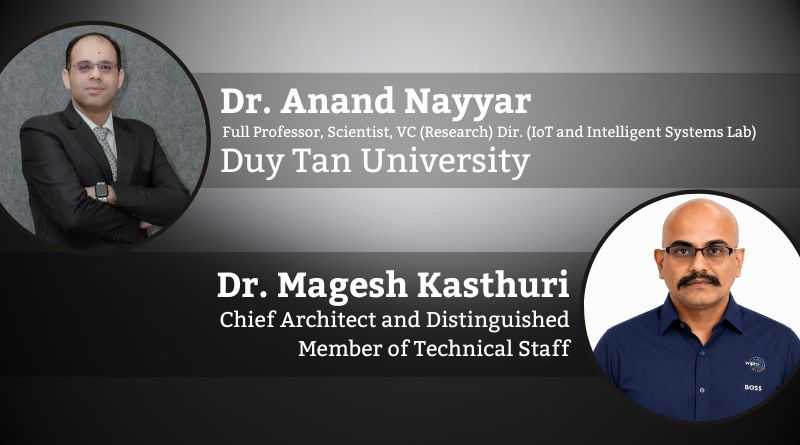
By Dr. Magesh Kasthuri, Chief Architect and Distinguished Member of Technical Staff and Dr. Anand Nayyar, Full Professor, Scientist, Vice-Chairman (Research) and Director (IoT and Intelligent Systems Lab), Duy Tan University.
Introduction
Data lineage has become the backbone of modern data governance and analytics. As organizations generate and utilize vast amounts of information, tracking where data originates, how it is transformed, and where it ultimately ends up is more critical than ever. Understanding data lineage not only ensures compliance and data quality but also builds trust among data users. Enter generative AI, a game-changer in automating and enriching the data lineage process, making it faster, smarter, and more reliable.
What Is Data Lineage?
At its core, data lineage is the detailed record of data’s journey: from its source, through various transformations, to its destination. Think of it as a detailed map that shows every twist, turn, and pit stop your data makes along the way. This map is invaluable for auditing, troubleshooting errors, meeting regulatory requirements, and fostering a culture of transparency.
Generative AI is redefining the landscape of data lineage by making it more automated, intelligent, and user-friendly.
How Generative AI Accelerates Data Lineage
Generative AI, with its ability to understand context, infer relationships, and automate complex tasks, is rapidly transforming how data lineage is created and maintained. Traditional data lineage solutions often relied heavily on manual documentation or basic automation, which could be slow, error-prone, and difficult to scale.
With generative AI, the process takes on a new dynamic:
- Automated Parsing: AI models can parse complex codebases, SQL queries, ETL pipelines, and even natural language documentation to infer relationships and dependencies between data assets.
- Contextual Understanding: Instead of rigid rule-based extraction, generative AI can “understand” intent and dynamic patterns, even when transformations are non-obvious or undocumented.
- Continuous Updates: As schema, code, or logic changes, generative AI adapts in real-time, ensuring the lineage map always reflects the current state of the ecosystem.
- Intelligent Recommendations: If lineage gaps are found, the AI can suggest or even generate plausible lineage links, reducing the time spent on manual fixes.
Practical Examples: Generative AI and Data Lineage in the Cloud
Microsoft Azure
On Microsoft Azure, solutions like Azure Purview (now Microsoft Purview) are leveraging generative AI models to automatically scan data sources, parse transformation scripts, and visually map out data lineage. For example, in a modern data warehouse built on Azure Synapse, Purview can use AI to read Spark scripts, SQL queries, and data factory pipelines, then stitch together a comprehensive lineage graph. If a data engineer updates a transformation in Azure Data Factory, Purview’s AI can quickly spot the change, update the lineage, and even alert stakeholders if downstream impacts are detected.
AWS Platform
Amazon Web Services brings generative AI into the mix through its AWS Glue Data Catalog and SageMaker integration. AWS Glue, for instance, can use AI-driven crawlers to inspect ETL scripts and automatically identify sources, targets, and transformations. By integrating with language models, AWS can go a step further: imagine a scenario where a data scientist asks, in plain English, “Where does this dashboard metric pull its data from?” The generative AI could consult data catalog metadata and pipeline code, then generate a plain-language lineage report on the fly. This reduces the friction for non-technical users and democratizes access to lineage insights.
Google Cloud Platform (GCP)
On Google Cloud Platform, tools like Data Catalog and Dataplex are increasingly employing generative AI to accelerate lineage mapping. GCP’s approach often emphasizes integration with BigQuery and Dataflow, where AI models analyze SQL scripts, job logs, and metadata to piece together lineage. For example, when a data pipeline in Dataflow is updated, GCP’s AI can detect new or changed dependencies and auto-generate lineage visualizations. Moreover, with generative AI, users can ask complex “what if” questions or search for lineage gaps, and the AI will interpret intent, sift through metadata, and generate responses or recommendations.
Below is a comparative table highlighting the key features of data lineage acceleration using generative AI across Azure, AWS, and GCP:
| Feature | Azure (Purview) | AWS (Glue/SageMaker) | GCP (Data Catalog/Dataplex) |
| Automated Parsing of Pipelines | Yes; scans Synapse, Data Factory, Spark, SQL | Yes; parses ETL scripts, Glue jobs, Athena queries | Yes; scans Dataflow, BigQuery SQL, job logs |
| Generative AI for Natural Language Queries | Limited; evolving with Copilot and OpenAI | Available via SageMaker/Bedrock integration | Growing; supports Looker/Vertex AI integration |
| Real-Time Lineage Updates | Yes; reflects ongoing changes in the data landscape | Yes; auto-updates with Glue crawlers | Yes; dynamic with Dataflow/BigQuery pipelines |
| Lineage Visualization | Graphical UI in Purview | Available in Glue Console, third-party tools | Integrated with Dataplex and Looker |
| AI-Powered Gap Detection & Recommendation | Emerging; AI can suggest missing links | Developing, can recommend lineage paths | Available; suggests corrections and highlights gaps |
| Integration with Other AI Services | Works with Azure OpenAI, Copilot | Integrates with SageMaker, Bedrock | Uses Vertex AI, supports custom models |
| Support for Policy & Compliance Mapping | Strong; maps lineage to governance policies | Available; integrates with Lake Formation | Strong; connects with Data Governance controls |
Best Practices for Implementing Data Lineage with Generative AI
When it comes to rolling out data lineage solutions powered by generative AI in cloud environments, a thoughtful approach makes all the difference. It’s wise to start with a clear understanding of your organization’s data flows and business objectives. Make sure to involve all relevant stakeholders early on including IT, security, compliance, and business users, so that the solution aligns with everyone’s needs. Consistent documentation is crucial: keep records of your data sources, transformation steps, and lineage mappings up to date. Periodic audits and validation help ensure that your lineage tracking remains accurate as your data landscape evolves. Finally, leverage automation features offered by cloud platforms to minimize manual work and reduce the potential for human error.
Security Considerations
As with any cloud-based AI solution, security should be at the forefront of your implementation plan. Limit access to sensitive lineage data by enforcing strict identity and access management policies, using roles and permissions to ensure that only authorized personnel can view or modify key elements. Be sure to encrypt data both in transit and at rest, taking full advantage of the security tools provided by your chosen cloud provider. Regularly monitor for unusual access patterns or unauthorized changes in your data lineage platform, and quickly address any security incidents or vulnerabilities. Staying proactive about security not only protects your data but also builds trust across your organization.
Data Protection
Protecting the privacy and integrity of your data is non-negotiable, especially when sensitive or regulated information is involved. Before integrating generative AI tools for data lineage, assess whether any personal or confidential data will be processed and ensure compliance with relevant regulations, such as GDPR, HIPAA, or local privacy laws. Opt for services that offer robust data anonymization and masking features, and maintain a clear audit trail of data access and processing activities. Data retention policies should also be well defined, specifying how long lineage data is stored and when it should be deleted. These steps will help you safeguard sensitive information while still deriving valuable insights from your data lineage solution.
Data Management in Generative AI-Powered Lineage
Effective data management is the backbone of a successful data lineage initiative. Establish clear data quality protocols to ensure that all datasets feeding into your lineage system are clean, complete, and reliable. This may involve setting up automated data validation checks and quality dashboards. Version control is another important consideration, track changes to both your data and your lineage mappings, so you can roll back or audit modifications as needed. Collaboration between teams is key; encourage communication between data engineers, governance teams, and business analysts to ensure the lineage reflects real-world processes and requirements. Ultimately, a well-managed lineage platform not only enhances compliance and transparency but also empowers users across the organization to make data-driven decisions with confidence.
Performance consideration in developing AI AI-based Data Lineage solution
The development of AI-driven data lineage platforms demands careful attention to performance, as these systems must function at the intersection of accuracy, responsiveness, and scalability. From a theoretical standpoint, performance in lineage systems is not confined to computational efficiency but extends to how effectively the system can provide timely, context-rich lineage insights while maintaining reliability under diverse workloads.
Key performance metrics include latency, which measures the responsiveness of lineage queries; throughput, which assesses the volume of lineage tasks handled per unit time; and resource utilization, encompassing CPU, GPU, and memory consumption. AI models integrated into lineage systems, particularly large language models (LLMs) or fine-tuned generative architectures, pose unique challenges due to their inference overheads. Consequently, hybrid optimization strategies are essential, such as:
- Model Distillation and Pruning: Reducing model complexity without sacrificing predictive accuracy.
- Caching and Incremental Processing: Storing lineage fragments and updating incrementally rather than recomputing the entire lineage graph.
- Distributed Architectures: Employing scalable frameworks (e.g., Kubernetes, Spark, or Ray) to ensure horizontal scalability in enterprise environments.
- Performance Trade-offs: Balancing precision of inferred lineage links against query execution time, especially for mission-critical domains such as healthcare or financial services.
Research suggests that enterprises adopting AI for lineage must adopt a multi-layered performance framework, optimizing at the model level, system level, and business level. For example, Microsoft Purview and AWS Glue leverage generative AI in conjunction with metadata indexing services to deliver near-real-time lineage queries while containing computational costs.
Automating Lineage mapping and discovery using Generative AI
Traditional lineage discovery has relied on rule-based extraction and manual documentation, both of which are time-intensive and error-prone. Generative AI introduces a paradigm shift by enabling semantic, context-aware automation across heterogeneous data landscapes. The theoretical underpinning lies in the ability of generative models to interpret unstructured, semi-structured, and structured inputs from SQL queries and Spark pipelines to API logs and documentation, then synthesize these into coherent lineage graphs.
Automation is achieved through several mechanisms:
- Natural Language Parsing: LLMs convert human-readable documentation into machine-usable lineage mappings.
- Dynamic Code Interpretation: Models analyze live ETL/ELT workflows, identifying transformations and dependencies even when undocumented.
- Schema Drift and Evolution: Generative AI adapts to evolving data structures by inferring new linkages without manual intervention.
- Gap Detection and Prediction: Where explicit metadata is missing, AI models extrapolate likely lineage paths based on historical or contextual knowledge.
- Continuous Discovery Pipelines: Autonomous agents monitor data flows and refresh lineage maps in near real-time, ensuring system agility.
From an industry perspective, this automation reduces manual effort by up to 70–80%, accelerates compliance readiness, and enables proactive governance. In high-frequency trading or e-commerce, where schema modifications occur daily, AI-driven discovery ensures that lineage remains synchronized with rapidly evolving pipelines. This ability to self-heal and continuously discover makes generative AI an indispensable tool for modern data governance ecosystems.
Integration with Data catalog solutions
The true value of AI-powered data lineage is realized when seamlessly integrated with enterprise data catalog platforms. Data catalogs serve as the organizational backbone of modern data ecosystems, providing metadata management, governance enforcement, and user access to trusted data assets. Integration of lineage into catalogs enhances both governance and accessibility by connecting “where the data is” with “how the data flows.”
Theoretical frameworks such as OpenLineage and Apache Atlas provide the interoperability standards needed for such integration. Generative AI enriches catalog metadata by embedding inferred lineage, semantic context, and natural-language explanations into catalog entries. This enrichment strengthens:
- Governance Alignment: Linking catalog metadata with lineage ensures regulatory compliance, auditability, and alignment with enterprise data policies (GDPR, HIPAA, PCI DSS).
- Enhanced Data Discovery: Users can query catalogs using natural language for example, “What upstream sources contribute to the customer churn model?” and receive lineage-aware responses.
- Metadata Democratization: Non-technical stakeholders gain transparent visibility into dependencies without requiring specialist tools.
- Operational Efficiency: Catalog-lineage integration reduces redundancy, supports impact analysis, and empowers data stewards to manage ecosystems holistically.
Case studies show that platforms such as Collibra, Alation, and Google Dataplex are embedding AI-driven lineage capabilities directly into catalog UIs, enabling organizations to transition from static metadata repositories to dynamic, intelligent data fabrics. This alignment accelerates data democratization while preserving robust governance controls, making integrated lineage-catalog ecosystems a cornerstone of enterprise digital transformation strategies.
Conclusion
Generative AI is redefining the landscape of data lineage by making it more automated, intelligent, and user-friendly. Whether you’re working with Azure, AWS, or GCP, AI-driven lineage solutions are bridging the gap between technical complexity and accessibility. As these platforms continue to innovate, expect to see even more seamless integration, richer lineage mapping, and smarter insights that empower everyone from engineers to business analysts to harness the full potential of their data.