
New Age Technology Roles in IT Organisations: Shaping the Future of Enterprise Innovation
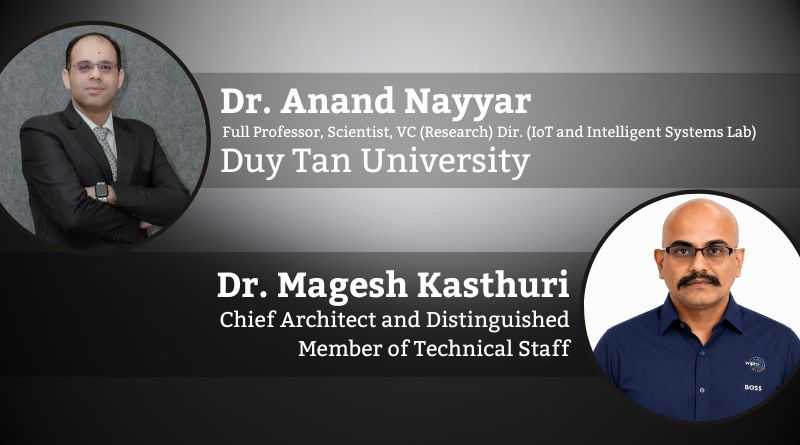
By Dr. Magesh Kasthuri, Chief Architect and Distinguished Member of Technical Staff and Dr. Anand Nayyar, Full Professor, Scientist, Vice-Chairman (Research) and Director (IoT and Intelligent Systems Lab), Duy Tan University
Introduction
The landscape of Information Technology (IT) organisations is rapidly transforming. The emergence of advanced technologies such as artificial intelligence, cloud computing, and digital platforms has created a need for specialised roles that bridge the gap between business strategy and technical execution. Traditional IT hierarchies are giving way to dynamic structures where new age technology roles are critical to maintaining competitiveness and fostering innovation.
This article delves into the responsibilities and organisational relevance of key positions such as the Executive Architect, Engineering Head, AI Practitioner, AI Head, and Head of Strategic Initiatives. It also explores the convergence of people management and technology management, offering strategic insights for CIOs, CTOs, and CEOs as they reshape their IT portfolios.
Each role below is described through responsibilities, organizational necessity, and typical reporting interfaces, with explicit decision rights and measurable outcomes to support operating-model clarity.
Executive Architect
Role and Responsibilities
The Executive Architect is a senior leader responsible for the overall architectural vision of an organisation’s technology landscape. This role involves defining architectural standards, ensuring alignment with business objectives, and guiding the adoption of emerging technologies. Executive Architects collaborate with both technical and business teams to bridge strategic goals and practical implementation.
- Develop and maintain enterprise-wide architectural frameworks;
- Ensure technology solutions are scalable, secure, and adaptable;
- Facilitate cross-functional collaboration to drive architectural consistency;
- Mentor solution architects and technical leads;
- Establish and run architecture governance mechanisms;
- Define platform and integration guardrails in partnership with Engineering and Security leaders;
- Quantify and manage technical debt via modernization roadmaps and architectural fitness functions (where applicable).
Necessity in Modern Environments
In a rapidly evolving technology environment, the Executive Architect’s role is indispensable for harmonising disparate systems, integrating new technologies, and ensuring that IT investments are future-proof. As digital transformation accelerates, having a dedicated architectural leader helps organisations avoid technical debt and supports long-term growth.
- Decision Rights & Interfaces: Owns enterprise architecture standards and reference patterns; co-owns target-state roadmaps with CTO/CIO; interfaces deeply with Engineering Head (delivery feasibility), AI Head (model/platform alignment), and Security leadership (security architecture patterns).
- Core KPIs / Outcomes:
- Architecture conformance rate (by portfolio/line of business)
- Reduction in duplicate capabilities and non-standard platforms
- Technical debt burn-down (e.g., legacy decommission velocity, risk-weighted debt index)
- Time-to-approve architecture decisions with controlled exception rates
The rise of New Age Technology roles signals a profound shift in how IT organisations operate and deliver value.
Organisational Chart Example
The Executive Architect typically reports directly to the CTO or CIO and oversees a team of solution architects, enterprise architects, and technical leads. Their position places them at the nexus of strategic planning and technical execution, as shown in below Org chart diagram.

Engineering Head
Role and Responsibilities
The Engineering Head leads the engineering department, overseeing the development, delivery, and maintenance of software solutions. This role is central to ensuring that engineering teams adhere to high standards of quality, efficiency, and innovation.
- Set technical direction and strategy for engineering teams
- Manage project timelines, resource allocation, and budget
- Establish best practices and standards for software development
- Foster a culture of continuous improvement and learning
Necessity in Modern Environments
As IT organisations scale, the complexity of engineering projects increases. The Engineering Head ensures that teams remain agile, productive, and aligned with organisational objectives. This role is essential in environments where rapid product iteration and innovation are key to staying competitive.
Organisational Chart Example
The Engineering Head usually reports to the CTO or VP of Technology and manages engineering managers, senior engineers, and development teams, as shown in below Org chart diagram.

AI Practitioner
Role and Responsibilities
An AI Practitioner is an expert in designing, developing, and deploying artificial intelligence solutions. Their work includes data modelling, algorithm development, and the integration of machine learning models into business processes.
- Analyse business problems and identify AI-driven solutions
- Develop, test, and deploy machine learning models
- Collaborate with data engineers and business analysts
- Monitor and refine AI systems for optimal performance
Necessity in Modern Environments
With AI becoming a cornerstone of digital transformation, AI Practitioners are vital for unlocking new efficiencies and creating competitive advantages. Their expertise enables organisations to harness data, automate processes, and deliver personalised customer experiences.
Organisational Chart Example
AI Practitioners are often part of dedicated data science or AI teams, reporting to the AI Head or Chief Data Officer, as shown in the org chart below Org chart.

AI Head
Role and Responsibilities
The AI Head leads the organisation’s artificial intelligence strategy and oversees the development and deployment of AI solutions. This role ensures that AI initiatives are aligned with business goals and delivered ethically and responsibly.
- Define and execute the AI strategy across the organisation
- Build and manage multidisciplinary AI teams
- Establish policies for ethical AI use and data governance
- Drive innovation by exploring new AI technologies and partnerships
Necessity in Modern Environments
As AI adoption accelerates, a dedicated AI Head ensures coherent strategy, governance, and risk management. This role is crucial for scaling AI initiatives and fostering a culture of responsible innovation.
Organisational Chart Example
The AI Head typically reports to the CTO, CIO, or Chief Digital Officer, managing AI practitioners, data scientists, and data engineers, as shown in the Org chart diagram.
Head of Strategic Initiatives
Role and Responsibilities
The Head of Strategic Initiatives is responsible for identifying, planning, and executing high-impact projects that drive organisational change and growth. This role acts as a catalyst for innovation, ensuring that strategic projects are delivered on time and within scope.
- Identify and prioritise strategic projects in line with business goals
- Coordinate cross-functional teams and resources
- Track project progress and ensure successful delivery
- Report outcomes to senior leadership and adjust strategies as needed
Necessity in Modern Environments
With the pace of technological and market change, organisations require a dedicated leader to manage transformation initiatives. The Head of Strategic Initiatives brings structure and accountability to innovation efforts, improving the chances of successful outcomes.
Organisational Chart Example
This role often reports to the CEO, COO, or Chief Strategy Officer, and works closely with department heads and project managers, as shown below.

The Convergence of People Management and Technology Management
Modern IT organisations are witnessing a significant convergence between people management and technology management. Leaders now require a blend of technical expertise and strong interpersonal skills to navigate complex, cross-functional environments. This integration is shaping the way teams are structured, how projects are delivered, and how innovation is fostered.
People management skills such as empathy, communication, and team building are as essential as technical know-how. The most successful IT leaders are those who can inspire and empower diverse teams, drive change, and manage stakeholder relationships while keeping pace with technological advancements. This convergence is breaking down traditional silos, leading to more agile, collaborative, and resilient organisations.
In practical operating-model terms, this convergence is expressed through product-centric team topologies (product teams, platform teams, enabling teams) and intentional reduction of cognitive load via reusable platforms, guardrails, and standards.
Talent systems also need to evolve: dual-track career paths (IC vs manager), explicit competency matrices for architects/data/AI/security, and communities of practice that propagate standards without central bottlenecks.
Reshaping the IT Portfolio: Guidance for CIOs, CTOs, and CEOs
To thrive in an era of rapid technological change, CIOs, CTOs, and CEOs must rethink their IT portfolios. Embracing new age technology roles is a crucial first step. Here are key strategies for reshaping IT portfolios:
- Adopt a People-First Approach: Prioritise talent development and foster a culture of continuous learning to adapt to emerging technologies.
- Invest in Leadership Development: Equip technical leaders with people management skills to drive cross-functional collaboration.
- Promote Agile Structures: Move away from rigid hierarchies towards flexible teams that can respond quickly to change.
- Leverage Data and AI: Integrate data-driven decision-making and AI capabilities across business functions.
- Focus on Strategic Initiatives: Create dedicated roles and teams to drive innovation and transformation projects.
- Ensure Robust Governance: Establish clear policies for technology adoption, ethical AI use, and data privacy.
Strategic roles for AI and Data services
Strategic AI and Data services require explicit role design beyond “data science teams,” typically anchored by a Head of Data & AI Platforms (or CDO-equivalent) working in lockstep with the AI Head. Core responsibilities include establishing a data-product operating model (domain ownership, stewardship, SLAs), defining reference architectures with the Executive Architect, and institutionalizing DataOps/MLOps (CI/CD for pipelines, feature stores, model registries, monitoring, retraining triggers). The function governs end-to-end data lifecycle controls, ingestion, quality, lineage, metadata, retention and ensures interoperability via canonical models, APIs, and event streams.
Necessity in Modern Environments
As AI scales, value depends on repeatable platforms and decision rights: federated governance, standardized KPIs (data freshness, model drift, cost-to-serve), and portfolio prioritization with the Head of Strategic Initiatives. The Engineering Head operationalizes platform reliability (SRE practices), while the AI Head enforces model lifecycle controls and model risk segmentation, enabling measurable outcomes without accumulating hidden data/technical debt.
Reshaping roles in Security, Privacy and Compliance
Security, Privacy, and Compliance roles must shift from gatekeeping to embedded control engineering. A modern structure pairs a Head of Cybersecurity Engineering with a Privacy Engineering Lead and GRC/Assurance Lead, aligned to product and platform teams. Responsibilities include implementing zero trust (identity-centric access, continuous verification), secure SDLC (threat modeling, SAST/DAST, supply-chain controls/SBOM, secrets management), and policy-as-code guardrails integrated into CI/CD and cloud landing zones. For AI, controls extend to model risk management: data provenance, adversarial testing, prompt/instruction hardening, abuse monitoring, and audit-ready traceability of training/inference inputs.
Necessity in Modern Environments
Regulatory and reputational risk increases with cloud, APIs, and AI-driven automation; therefore, governance must be measurable and automatable. Executive Architects define security reference patterns; Engineering Heads enforce remediation SLAs; AI Heads co-own ethical/responsible AI controls; Heads of Strategic Initiatives ensure control assurance is planned into transformation roadmaps, reducing cycle time while improving compliance evidence quality.
Conclusion
The rise of new age technology roles signals a profound shift in how IT organisations operate and deliver value. By embracing these roles and fostering the convergence of people and technology management, enterprises can unlock new levels of innovation, agility, and resilience. For IT leaders, the imperative is clear: continually evolve, invest in talent, and build adaptable structures to navigate the complexities of the digital age. Those who do will be well-positioned to lead their organisations into a future defined by technological excellence and strategic foresight.
Together, these roles formalise decision rights across architecture, engineering, data/AI, and risk, reducing friction while scaling innovation through measurable governance and repeatable delivery mechanisms.