
AI’s Transformative Journey in Software Development
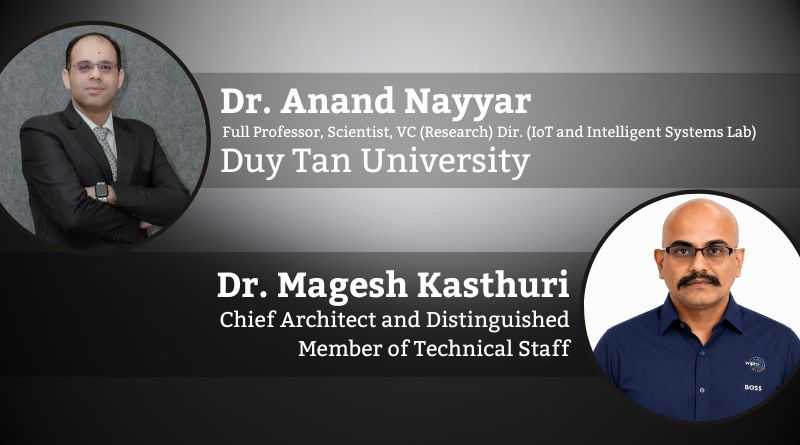
By Dr. Magesh Kasthuri, Chief Architect and Distinguished Member of Technical Staff and Dr. Anand Nayyar, Full Professor, Scientist, Vice-Chairman (Research) and Director (IoT and Intelligent Systems Lab), Duy Tan University
How Artificial Intelligence Accelerates Greenfield and Brownfield Innovation
Introduction
Artificial Intelligence (AI) has become an essential companion in the world of software engineering, reshaping how teams build, maintain, and evolve applications. Whether tackling fresh, groundbreaking initiatives or revitalising time-tested systems, AI’s journey is marked by continuous support and innovation. This article explores a typical day in the AI journey, highlighting how intelligent solutions guide both greenfield and brownfield development. The goal is to provide software professionals and tech teams with a genuine, approachable viewpoint on the practical applications of AI.
Accelerating Greenfield and Brownfield innovation with AI infusion
Greenfield innovation refers to creating software solutions with a clean slate, free from the constraints of legacy systems. In this context, AI acts as a catalyst, enabling development teams to experiment boldly with new architectures, tools, and approaches. Machine learning models and advanced algorithms can automate tedious coding tasks, predict project bottlenecks, and assist in rapid prototyping. This means developers spend less time on manual groundwork and more time focusing on creativity and strategic problem-solving.
For instance, AI-powered code generators can interpret natural language requirements and convert them into working prototypes, reducing the initial development cycle. Intelligent testing systems can also simulate countless scenarios, ensuring robust performance before the product goes live. Ultimately, AI empowers software engineers to innovate faster and with greater confidence, making greenfield projects more agile and adaptable than ever before.
Brownfield projects, on the other hand, involve updating, integrating, or modernising existing software systems. Here, AI proves invaluable in navigating the complexities of legacy code, disparate data sources, and outdated processes. By leveraging AI-driven analytics and automation tools, development teams can identify inefficiencies, optimise workflows, and seamlessly integrate new functionalities.
Natural Language Processing (NLP) algorithms help decode and document old codebases, making it easier for engineers to understand and improve upon them. AI also supports refactoring by recommending optimal changes, ensuring smoother transitions without disrupting current operations. Furthermore, predictive analytics can anticipate future maintenance needs, reducing downtime and enhancing overall system reliability.
Across both greenfield and brownfield scenarios, AI’s role is transformative. It doesn’t just automate routine tasks; it introduces a new paradigm for innovation. By harnessing AI, software development teams can move beyond traditional barriers, embrace smarter tools, and deliver solutions that are more resilient, scalable, and tailored to modern needs.

As AI continues to evolve, its impact will only deepen—enabling organisations to rethink how they build, renew, and maintain software. In the grand scheme of things, AI is not just accelerating innovation; it is fundamentally redefining what is possible in software development.
In summary, AI accelerates both greenfield and brownfield innovation in software development by automating processes, offering strategic insights, and empowering teams to achieve more with fewer resources. Whether starting afresh or upgrading existing systems, embracing AI is key to staying ahead in the ever-changing world of technology.
The AI journey in software development is a story of partnership and progress. From greenfield creativity to brownfield revitalisation, AI empowers teams to work smarter, learn faster, and deliver higher-quality solutions.
Greenfield Development: Redefining Project Creation
In greenfield development, teams start with a clean slate. Here, AI stands out as a creative partner, helping developers design, code, and launch new applications with impressive speed and efficiency. The absence of legacy constraints opens doors for experimenting with modern coding styles and frameworks. Thanks to AI’s ability to analyse requirements and suggest architectures, the process of setting up new projects is not just faster, but smarter.

A. AI-Assisted Code Creation: Streamlining Development
Gone are the days when writing code line by line consumed hours or days. Today, AI-powered coding tools act as co-developers, generating boilerplate code, offering syntax suggestions, and even refactoring logic to improve performance. Developers can describe functionality in plain English, and AI translates it into working code snippets. This synergy allows teams to focus on higher-level design and problem-solving, with AI taking care of repetitive, error-prone tasks.
B. Accelerating Discovery and Intake: Fast-Tracking Project Initiation
Initiating a new project often involves gathering requirements, scoping features, and planning resources. AI expedites this phase by parsing documentation, extracting key needs, and proposing workflows. Intelligent intake tools can analyse patterns from past projects and recommend optimal feature sets, helping teams quickly align their vision and avoid common pitfalls. As a result, discovery meetings become more productive, and project kick-offs happen sooner than ever.
C. Vibe Coding: Rapid Team Upskilling Through AI
Upskilling is a continuous challenge, especially as technologies evolve. AI introduces “vibe coding” a dynamic approach where team members learn coding practices in real time by interacting with AI agents. These agents provide instant feedback, highlight best practices, and even simulate pair programming sessions. With AI as a mentor, developers at all experience levels can absorb new languages, frameworks, and patterns, accelerating collective expertise and fostering a culture of continuous learning.
D. AI-Driven SDLC Activities: Enhancing Lifecycle Management
The Software Development Lifecycle (SDLC) is packed with activities—design, development, testing, deployment, and monitoring. AI supports every stage by automating documentation, generating test cases, and monitoring application behaviour. It predicts bottlenecks, recommends process improvements, and flags potential issues before they escalate. By weaving AI into SDLC routines, teams experience smoother handoffs and fewer surprises throughout the development journey.
Agentic SDLC Framework Solutions: Building Smarter Processes
AI agents have matured from passive assistants to active decision-makers. In SDLC frameworks, agentic solutions orchestrate tasks, assign resources, and enforce governance rules. These agents learn from historical data to optimise workflows and ensure compliance with industry standards. The result is a development process that is both adaptive and robust, minimising manual oversight while maximising productivity and quality.
Brownfield Development: Revitalising Legacy Systems
Brownfield projects present a different set of challenges, focusing on existing applications that require updates, migration, or complete overhauls. AI steps in as a bridge between old and new, helping teams understand legacy code, identify areas for improvement, and plan seamless transitions. This capability is invaluable when modernising critical systems that cannot afford long downtimes.
Moving legacy systems to modern platforms is a complex, often risky process. AI simplifies migration by analysing code dependencies, mapping architecture, and suggesting migration strategies. During modernisation, AI tools refactor outdated code, recommend new frameworks, and clean up technical debt. Transformation is further boosted by AI’s ability to align legacy functionality with contemporary business needs, making old applications fit for current markets.
Understanding legacy systems often begins with reverse engineering deciphering how code works and what it does. AI excels at parsing source code, generating documentation, and producing technical diagrams. It translates inscrutable logic into human-readable formats, enabling teams to quickly grasp functionality without spending weeks poring over old files. This automated approach improves onboarding and supports future maintenance.

Quality assurance and rapid delivery are vital for both new and legacy systems. AI-driven test automation crafts test cases, runs simulations, and analyses results, catching bugs before they reach production. For continuous integration and deployment (CI/CD), AI monitors pipeline health, predicts deployment risks, and resolves conflicts automatically. This ensures reliable releases and reduces manual intervention, giving teams more time to innovate.
A. Migration, Modernisation, and Transformation: AI’s Impact on Legacy Codebases
AI’s approach to legacy systems is not a single action but a strategic continuum, leveraging specific, advanced techniques at each stage.
1. AI-Accelerated Migration: This phase moves beyond manual “lift-and-shift” by using AI for sophisticated environment synthesis. AI agents perform deep static and dynamic analysis of the legacy application, not just mapping code dependencies but also observing runtime network traffic and resource consumption. This data is used to automatically generate precise Infrastructure as Code (IaC) using tools like Terraform or OpenTofu. The AI can even model complex network security rules and IAM policies, effectively creating a digital twin of the on-premise environment in the cloud. This drastically reduces configuration drift and day-one deployment failures, ensuring a high-fidelity migration.
2. LLM-Driven Modernisation: Modernisation is where AI’s impact is most profound, primarily through the AI-augmented Strangler Fig Pattern. Instead of manual decomposition, AI analyzes the monolithic codebase to identify ideal “seams” bounded contexts with low coupling and high cohesion that are ripe for being “strangled” and replaced by a new microservice. For the core translation, advanced code transpilation models (which go beyond simple translation by adopting modern idioms) convert legacy languages like COBOL or PL/I into idiomatic, maintainable Java or Python, complete with functional programming constructs and asynchronous patterns. Concurrently, the AI generates the crucial anti-corruption layer (ACL) and API gateway configurations (e.g., for Amazon API Gateway or Azure API Management) needed to seamlessly redirect calls from the monolith to the new service, ensuring zero-downtime modernization.
3. Generative Transformation: The ultimate goal, transformation, uses AI as a partner in Domain-Driven Design (DDD). By analyzing data access patterns, transaction boundaries, and communication flows within the monolith, generative AI tools can propose a complete DDD model, identifying Aggregates, Bounded Contexts, and business-centric Events. This simulates a digital Event Storming session, providing architects with a blueprint for a truly event-driven, cloud-native architecture. From this blueprint, the AI can then bootstrap the new system by generating OpenAPI or AsyncAPI specifications for the new microservices, along with boilerplate code for message consumers/producers (e.g., for Kafka or RabbitMQ) and persistence layers, turning architectural vision into executable reality.
B. Reverse Engineering and Documentation: AI-Powered Technical Insights
AI has turned reverse engineering from a forensic chore into a dynamic, interactive process of knowledge discovery.
The core innovation is the creation of a Code Knowledge Graph. AI parsers analyze the entire codebase to build a graph where nodes represent functions, classes, database schemas, and API endpoints, and edges represent relationships like calls, inherits from, reads data from, or is called by. This static graph is then enriched with dynamic runtime data from OpenTelemetry traces, which adds real-world context about performance bottlenecks and frequent execution paths.
This rich graph powers two key capabilities. First, it enables the generation of living documentation. Instead of a static PDF, this is a web-based, explorable model of the system that is automatically updated via a CI/CD pipeline hook with every commit. Second, and more powerfully, it leverages Vector Embeddings. Each node in the graph (a function, a class) has its code and comments converted into a numerical vector representation and stored in a specialized vector database (like Pinecone, Weaviate, or ChromaDB). When a developer asks a natural language question (“How is a user’s payment processed?”), the question is also converted into a vector. The system then performs a similarity search to find the most relevant code paths, functions, and documentation snippets, presenting a coherent, step-by-step explanation. This transforms the legacy codebase from an opaque liability into a transparent, queryable asset.
C. Test Automation and CI/CD: Automating Quality Assurance and Delivery
AI is evolving CI/CD from a passive automation chain into a proactive, intelligent AIOps-driven delivery system.
In testing, the paradigm is shifting from scripted automation to AI-driven autonomous testing. This often involves Reinforcement Learning (RL) agents that are rewarded for discovering new UI states, increasing code coverage, or triggering unhandled exceptions. These agents have the ability to independently investigate a web application, developing and carrying out a dynamic test plan that adjusts in real-time to UI changes and identifies issues that brittle, prewritten test scripts would overlook.
Within the CI/CD pipeline itself, AI introduces radical efficiency. The key technique is Test Impact Analysis (TIA). By parsing the Abstract Syntax Tree (AST) of the committed code changes, the AI precisely understands the “blast radius” of a change and runs only a small subset of the test suite that is actually affected. This can reduce testing time from hours to minutes. When a test does fail, AI-powered root cause analysis kicks in. The system correlates the failed test with application logs from platforms like Splunk, infrastructure metrics from Kubernetes, and APM traces from Datadog or Dynatrace. It can then pinpoint the exact line of code or configuration change that caused the failure. The final step is auto-remediation, where a generative AI model suggests a code patch, validates it against the relevant tests in a sandbox environment, and, if successful, automatically creates a pull request for human review, creating a truly self-healing pipeline.
Conclusion
The AI journey in software development is a story of partnership and progress. From greenfield creativity to brownfield revitalisation, AI empowers teams to work smarter, learn faster, and deliver higher-quality solutions. By embracing AI as both a tool and a teammate, software professionals unlock new levels of efficiency, adaptability, and innovation making every day in tech more rewarding and impactful.