
Guidelines for Developing an AI Center of Excellence: A Strategic Roadmap
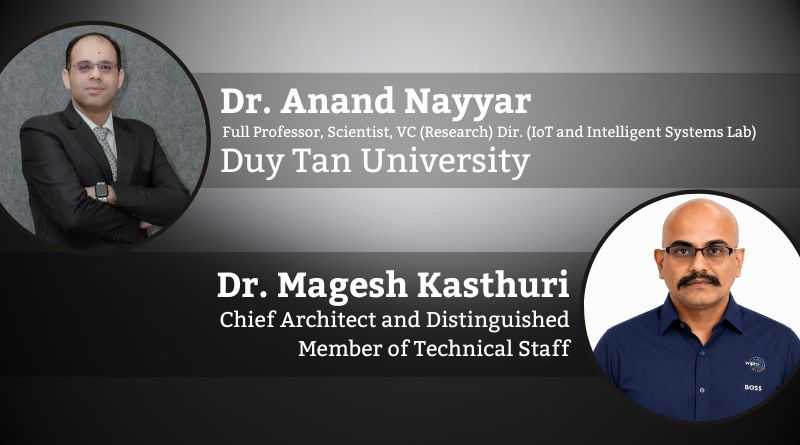
By Dr. Magesh Kasthuri, Chief Architect and Distinguished Member of Technical Staff and Dr. Anand Nayyar, Full Professor, Scientist, Vice-Chairman (Research) and Director (IoT and Intelligent Systems Lab), Duy Tan University
Empowering Organisations to Lead Their AI Journey
Introduction
Artificial Intelligence (AI) is reshaping industries, driving innovation, and unlocking new avenues for growth. For organisations aiming to harness AI’s full potential, establishing an AI Center of Excellence (AI-COE) is a crucial step. An AI-COE acts as the nerve centre for AI strategy, ensuring that efforts are aligned, sustainable, and impactful. This article presents a comprehensive set of guidelines for building an effective AI-COE, tailored for organisational leaders and AI strategists.
AI Governance: Setting the Foundation for Success
Strong governance is the backbone of any successful AI initiative. The AI-COE must establish clear oversight mechanisms, policies, and accountability structures to ensure transparency and accountability. Governance ensures that AI projects align with organisational objectives, legal requirements, and ethical standards. By instituting review boards, defining approval processes, and regularly monitoring outcomes, organisations can maintain control over their AI journey while fostering innovation.
User Personas and Roles: Defining Stakeholders and Responsibilities
Identifying and defining user personas is essential for the effective functioning of an AI-COE. Key stakeholders typically include data scientists, business analysts, IT specialists, project managers, and decision-makers. Each role should have well-articulated responsibilities, ensuring that expertise is leveraged appropriately. Clear role definitions facilitate collaboration, streamline communication, and prevent overlaps or gaps in critical tasks.
Selecting appropriate tools and frameworks is a pivotal decision for any AI-COE. Criteria should include scalability, compatibility with existing systems, ease of use, and community support. Open-source platforms and cloud-based solutions often provide flexibility and cost-effectiveness. It is essential to assess each tool’s strengths and limitations, ensuring they meet both current needs and future growth objectives.
Establishing an AI Center of Excellence is a strategic investment that positions organisations to thrive in the age of Artificial Intelligence.
Tools and Frameworks: Choosing the Right Technology Stack
By 2025, the technology landscape for an AI-COE has evolved from a focus on model creation to an emphasis on building, governing, and orchestrating sophisticated, multi-modal AI systems. The choice between an end-to-end cloud suite like AWS SageMaker, Google Cloud Vertex AI, or Azure Machine Learning—and a custom open-source stack remains, but the components within that stack have become more specialized. The primary goal is to create a seamless, auditable, and highly automated “AI factory” capable of delivering robust and responsible AI solutions.
A forward-looking 2025 technology stack must be modular and adaptable, integrating tools that address the full lifecycle of both predictive and generative AI. This includes everything from data ingestion to real-time monitoring of autonomous agents.
A comprehensive stack for a leading AI-COE in 2025 would include:
- Core ML & Deep Learning Frameworks:
- PyTorch & TensorFlow: Remain the foundational pillars for model development, with increasing support for multi-modal and compiled model formats.
- JAX: Gaining traction for high-performance research and training of large-scale models due to its speed and functional programming paradigm.
- Scikit-learn: Continues to be the go-to for classical machine learning tasks and as a baseline for more complex projects.
- Large-Scale Data Processing:
- Apache Spark & Dask: Essential for distributed data processing.
- Real-time Streaming Platforms (e.g., Apache Flink, Kafka): Critical for powering dynamic, event-driven AI applications that require immediate data ingestion and processing.
- Generative AI, Agentic, & Multi-Modal Ecosystem:
- Hugging Face Stack (Transformers, Diffusers, TRL): The central hub for accessing and fine-tuning a vast range of open-source models, including those for text, image, and audio generation.
- LLM Application Frameworks (e.g., LangChain, LlamaIndex): Standard frameworks for building context-aware applications through Retrieval-Augmented Generation (RAG) and orchestrating complex chains.
- AI Agent Frameworks (e.g., Microsoft AutoGen, CrewAI): Emerging toolkits for developing collaborative, autonomous agents that can reason, plan, and execute tasks.
- Vector Databases (e.g., Pinecone, Weaviate, Milvus): A non-negotiable component for enabling semantic search and long-term memory in RAG and agentic systems.
- LLMOps, Governance, and AI Safety:
- Experiment & Model Management (e.g., Weights & Biases, MLflow): Crucial for tracking the complex experiments involved in prompt engineering, fine-tuning, and model evaluation.
- LLM Observability & Guardrails (e.g., Arize AI, Fiddler AI, Galileo): Specialized platforms for monitoring LLMs in production, detecting hallucinations, data drift, and prompt injections, and enforcing responsible AI policies.
- AI Safety & Alignment Toolkits: Frameworks for red-teaming models, detecting bias, and ensuring outputs align with ethical guidelines, becoming a standard part of the deployment pipeline.
- Edge & On-Device AI:
- TensorFlow Lite, PyTorch Mobile, ONNX Runtime: Essential for deploying optimized models on edge devices, enabling real-time, low-latency applications with enhanced data privacy.
Processes and Guidelines: Standardising Workflows and Best Practices
Standardised processes and guidelines help maintain consistency and quality across AI projects. The AI-COE should develop documentation for project initiation, data handling, model development, deployment, and maintenance. Establishing best practices for version control, testing, and validation enables teams to deliver reliable solutions while minimising errors and delays.

Guardrails in AI Strategy: Setting Boundaries and Managing Risks
As AI systems, particularly generative models and autonomous agents, become more integrated into core business functions by 2025, establishing robust guardrails is no longer a supplementary measure but a foundational pillar of risk management. These guardrails are not meant to stifle innovation; rather, they are dynamic controls that enable the organization to innovate safely and responsibly. The AI-COE must architect a multi-layered guardrail framework that moves beyond static policies to include technical enforcement, procedural oversight, and continuous monitoring, thereby building trust and ensuring operational resilience.
An effective guardrail strategy addresses a spectrum of modern AI risks:
- Technical Guardrails: These are automated systems embedded within the AI pipeline to enforce operational boundaries in real-time. This includes input-output filtering to scan prompts and responses for toxic content, hate speech, or the inadvertent sharing of Personally Identifiable Information (PII). It also involves implementing mechanisms for topical alignment, ensuring an AI application stays within its designated domain (e.g., preventing a customer service bot from offering financial advice). Crucially, this layer includes sophisticated hallucination detection, where model outputs are cross-referenced against verified knowledge bases to ensure factual accuracy, and robust defenses against prompt injections and other adversarial attacks that seek to manipulate model behavior.
- Procedural Guardrails: These involve human oversight and structured workflows designed to manage exceptions and edge cases. A critical component is establishing clear human-in-the-loop escalation paths, defining precisely when a human expert must review or intervene in an AI-driven process. This is complemented by proactive red teaming, where dedicated teams simulate adversarial attacks to identify vulnerabilities before they can be exploited externally. Regular, scheduled audits and continuous performance monitoring, supported by specialized LLMOps and observability platforms, ensure that model behavior is tracked against established KPIs for fairness, accuracy, and drift.
- Governance and Policy Guardrails: This outermost layer sets the strategic direction for AI risk. It includes stringent data governance policies that dictate what data can be used for training and inference, and clear AI usage policies for employees and customers. Most importantly, this layer ensures proactive alignment with the evolving global regulatory landscape, such as the EU AI Act. By embedding compliance and ethical considerations into the design phase, the AI-COE ensures that the organization not only avoids legal penalties but also builds a reputation for trustworthy and responsible AI, turning a potential liability into a significant competitive advantage.
Responsible AI Guidelines: Upholding Ethics and Compliance
AI initiatives must operate within well-defined boundaries to mitigate risks. Guardrails can include policies on data privacy, security protocols, and ethical considerations. Organisations should perform regular risk assessments, monitor for unintended consequences, and be prepared to intervene when necessary. These measures ensure that AI solutions are both innovative and safe.
Responsible AI is about more than technical excellence; it encompasses ethical behaviour and regulatory compliance. The AI-COE should adopt guidelines that promote fairness, transparency, and accountability. This includes addressing bias in data and algorithms, ensuring explainability of models, and maintaining compliance with local and international regulations. A culture of responsibility fosters trust among stakeholders and the wider community.
Upskilling the Team: Investing in Training and Continuous Learning
As AI evolves, so must the skills of those implementing it. The AI-COE should prioritise regular training programmes, workshops, and knowledge-sharing sessions. Upskilling programs enable teams to boldly innovate, implement best practices, and stay up to date with the most recent developments. Encouraging certifications and participation in industry forums also enhances expertise and credibility.
Show and Tell Stories: Demonstrating Value Through Impactful Narratives
Success stories play a vital role in building organisational momentum for AI. The AI-COE should curate ‘show and tell’ presentations that highlight completed projects, tangible benefits, and lessons learnt. These stories not only showcase value but also inspire broader engagement and support from stakeholders. Effective storytelling transforms abstract achievements into relatable examples of progress.
Developing AI solutions is best approached in phases. Start with pilot projects to validate concepts and refine methodologies. Gradually expand to larger initiatives, incorporating feedback and lessons from earlier phases. This incremental strategy allows for manageable risk, continuous improvement, and scalable success. The AI-COE should document each phase, ensuring learnings are captured and applied throughout the journey.
Phased Approach: Step-by-Step Development and Scaling
In the dynamic landscape of AI, a phased approach to development and scaling is essential for managing risk, demonstrating value, and fostering sustainable growth. By 2025, this methodology will have evolved beyond traditional software development cycles to specifically address the complexities of both predictive and generative AI. An incremental strategy allows the AI-COE to build momentum, gather crucial feedback, and ensure that each solution is robust, responsible, and aligned with enterprise goals before being fully industrialized. This journey is best structured across four distinct, iterative phases.
Phase 1: Ideation and Proof of Concept (PoC) The journey begins with identifying high-impact, low-complexity use cases. The goal is not to build a perfect solution, but to rapidly validate technical feasibility and potential business value. For generative AI, a PoC might involve testing a Retrieval-Augmented Generation (RAG) system with a limited dataset to improve internal knowledge retrieval or fine-tuning an open-source model on a specific task. This phase is characterized by quick experimentation, with the AI-COE providing the sandbox environment and expertise to guide the process. The key outcome is a data-driven go/no-go decision, preventing resource drain on unviable projects.
Phase 2: Pilot and Minimum Viable Product (MVP) Once a PoC is successful, the project moves to the pilot phase, where an MVP is developed and deployed to a small, controlled group of end-users. This is a critical feedback-gathering stage. The focus shifts from pure feasibility to user experience, integration challenges, and the initial application of AI guardrails. The AI-COE’s standardized processes for data handling, model versioning, and preliminary monitoring (LLMOps) are applied here. This stage refines the solution and creates an operational playbook for the broader rollout, ensuring the technology effectively solves the intended business problem.
Phase 3: Production and Scaling. With a validated MVP and a clear operational plan, the solution is ready for a full-scale production launch. This phase concentrates on enterprise-grade robustness, scalability, security, and seamless integration with existing business systems. The comprehensive guardrails and governance frameworks established by the AI-COE are fully enforced. Continuous monitoring for performance, drift, and potential misuse becomes paramount. Success in this phase is measured not just by technical performance, but by the tangible business value and ROI delivered at scale.
Phase 4: Industrialization and Innovation The final phase marks the transition from scaling a single solution to creating a repeatable “AI factory.” The AI-COE abstracts the learnings and components, such as data connectors, fine-tuning pipelines, and agentic frameworks, into reusable assets. This industrialization accelerates the development of future AI applications across the organization. Furthermore, this stage fosters a cycle of continuous innovation, where insights from scaled solutions feed back into the ideation phase, uncovering new opportunities and pushing the boundaries of what’s possible with next-generation AI.
Conclusion
Establishing an AI Center of Excellence is a strategic investment that positions organisations to thrive in the age of artificial intelligence. By focusing on governance, stakeholder roles, technology choices, standardised processes, risk management, responsible practices, team development, impactful storytelling, and phased growth, leaders can chart a clear path towards sustainable AI success. With these guidelines, organisations are equipped to navigate their AI journey with confidence and purpose.