
Ambient Agents for Operational Excellence in IT Support
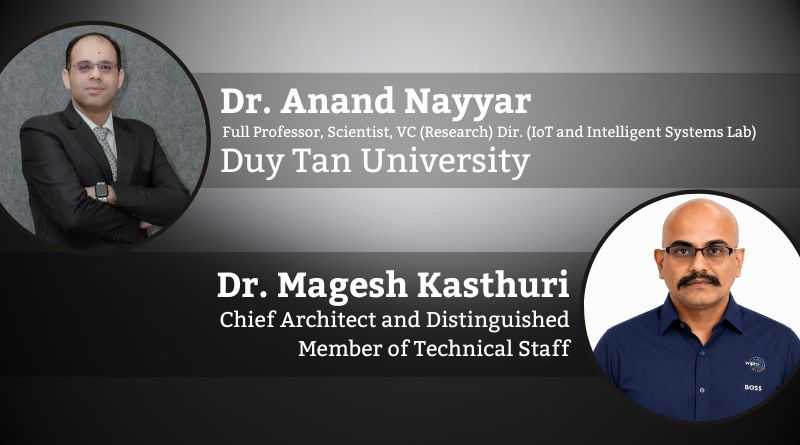
By Dr. Magesh Kasthuri, Chief Architect and Distinguished Member of Technical Staff and Dr. Anand Nayyar, Full Professor, Scientist, Vice-Chairman (Research) and Director (IoT and Intelligent Systems Lab), Duy Tan University
Introduction
Operational excellence in IT support is an ongoing pursuit within organisations aiming to deliver reliable, efficient, and cost-effective technology services. As digital infrastructure grows in complexity, traditional support models often struggle to meet rising expectations for responsiveness and resilience. In this context, the emergence of ambient agents represents a significant advancement. These intelligent, context-aware entities operate seamlessly within IT environments, driving automation and enabling proactive support that aligns with modern business needs.
Understanding Ambient Agents
Ambient agents are software entities designed to function unobtrusively within digital ecosystems, continuously monitoring, analysing, and responding to environmental changes. Unlike conventional agents, which typically act upon explicit requests or predetermined schedules, ambient agents are context-aware and event-driven. Their defining characteristics include:
- Context Awareness: Ability to perceive and interpret environmental cues in real time.
- Autonomy: Capability to make decisions and act independently, reducing human intervention.
- Adaptability: Flexibility to adjust behaviour based on evolving conditions and requirements.
- Seamlessness: Integration into existing workflows without disrupting user experience.
In contrast to traditional agents, which may require manual initiation or operate in isolation, ambient agents are designed to function as an integral part of the IT landscape, continuously enhancing operational processes.
Ambient agents represent a transformative approach to operational excellence in IT support, enabling organisations to automate complex tasks, enhance responsiveness, and proactively maintain service quality.
Event-Driven Ambient Agents in IT Support
Event-driven architecture is central to the effectiveness of ambient agents in IT support. In this paradigm, agents are triggered by specific events within the system, such as performance anomalies, security alerts, or user requests, rather than by scheduled tasks or direct commands. The lifecycle architecture of Ambient agents is shown in below reference diagram

This approach offers several advantages:
- Timely Response: Immediate action upon detecting critical incidents or changes.
- Resource Efficiency: Optimised utilisation by acting only when necessary, reducing redundant processing.
- Scalability: Ability to handle increasing event volumes as IT environments expand.
By leveraging real-time data streams and contextual information, event-driven ambient agents can automate routine tasks, orchestrate complex workflows, and facilitate proactive problem resolution.
Use Case Examples
Ambient agents unlock a range of automation possibilities within IT support. Notable use cases include:
- Incident Detection and Response: Agents continuously monitor system logs and network traffic, automatically identifying anomalies and triggering remediation workflows. For example, upon detecting unusual CPU usage, an agent may initiate diagnostic procedures and notify relevant teams.
- Self-Healing Systems: In environments with ambient agents, common issues such as application crashes or configuration drift can be resolved autonomously. Agents can restart services, adjust settings, or roll back updates without human intervention, ensuring service continuity.
- Proactive Maintenance: Agents analyse historical performance data to predict potential failures and schedule preventive actions. This reduces downtime and extends the lifespan of IT assets.
- User Support Automation: Ambient agents can handle routine user requests, such as password resets or software installations, by interacting with users through chatbots and executing tasks in the background.
Best Practices in Designing and Developing Ambient Agents
Designing ambient agents for IT support is less about “building a bot” and more about engineering reliable, event-driven autonomy with strong safety controls. Start with an explicit reference architecture: event sources (telemetry, alerts, tickets), an event bus/stream, context services (CMDB, topology, runbooks), an orchestration layer, and action executors (ITSM, IAM, cloud, endpoint tools). Use OpenTelemetry for traces/metrics/logs and enrich events with service topology and ownership metadata to reduce ambiguity during triage.
A practical pattern is sense →reason →act →verify. Agents should first validate signals (deduplicate, correlate, suppress noise), then reason using a combination of rules, statistical models, and where suitable, LLM-based reasoning bounded by guardrails. For LLM-enabled agents, implement tool-based execution (function calling), strict schemas, least-privilege credentials, and allowlisted actions. Keep a “human-in-the-loop” mode for high-risk changes (e.g., firewall rules, mass restarts), with progressive autonomy as confidence grows.
Reliability comes from engineering discipline: idempotent actions, retries with backoff, circuit breakers, and “rollback-first” runbooks. Every action should write an audit event (who/what/why), attach evidence, and update the ITSM record automatically. Measure outcomes using SRE-style signals, MTTD/MTTR, change failure rate, and alert noise and continuously tune correlation and policies. Finally, treat agents as products: versioning, canary releases, test harnesses with synthetic incidents, and post-incident learning loops.
Considerations for Adopting Ambient Agents
Adopting ambient agents is an organizational change as much as a technology upgrade. Begin with clear operating boundaries: which incident classes are safe for autonomous remediation, which require approvals, and which are strictly observational. Map these to risk tiers aligned with ITIL 4 change enablement and security policies. Many failures stem from weak foundations, noisy monitoring, incomplete CMDB/topology, or inconsistent runbooks, so prioritize observability maturity and knowledge hygiene before increasing autonomy.
Integration strategy is crucial. Ambient agents should plug into existing systems (ServiceNow/Jira ITSM, IAM, EDR/XDR, cloud control planes, CI/CD) through stable APIs and event streams. Define data contracts and event schemas early; without standardization, “context awareness” becomes guesswork. For regulated environments, plan for auditability, data residency, retention, and model governance (including prompt/version management and reproducibility for AI decisions).
Security is non-negotiable: apply least privilege, secrets management, signed actions, and segmentation so an agent cannot laterally move across environments. Implement input sanitization and policy enforcement while taking into account adversarial circumstances (poisoned telemetry, prompt injection via tickets/logs).
Operationally, define ownership: who maintains runbooks, who tunes correlation, and who is on call when the agent escalates. Start with high-ROI, low-risk use cases (password resets, auto-triage, diagnostics), then expand to self-healing for well-understood failure modes. Track adoption with business metrics, downtime avoided, ticket deflection, engineer hours saved and ensure workforce readiness through training, transparency, and “explainable” agent actions to build trust.
Conclusion
Ambient agents represent a transformative approach to operational excellence in IT support, enabling organisations to automate complex tasks, enhance responsiveness, and proactively maintain service quality. By adopting event-driven, context-aware agents, IT teams can move beyond reactive support models and embrace intelligent automation. As ambient technologies continue to evolve, their role in shaping the future of IT operations will only grow, offering new opportunities for efficiency, resilience, and innovation.