
Public Health Leadership in the Age of AI: Preparing the Workforce for the Future
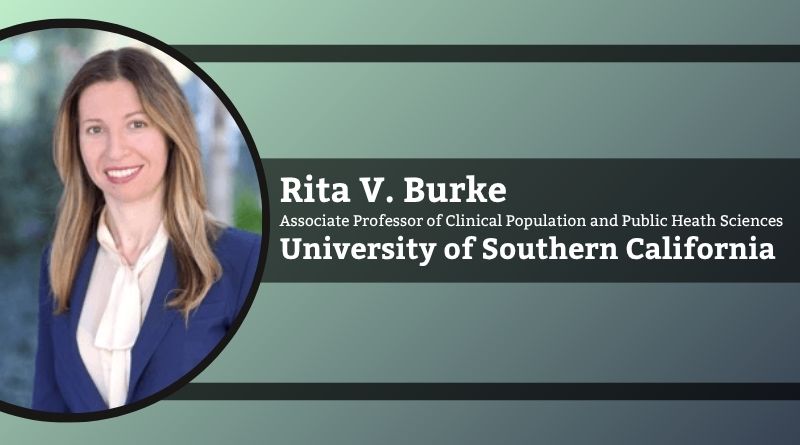
By Rita V. Burke, Associate Professor of Clinical Population and Public Heath Sciences, University of Southern California
Public health has faced transformational moments before.
Not long ago, leadership development was often viewed as optional within schools of public health. Students graduated with exceptional technical expertise in epidemiology, biostatistics, environmental health and health policy. Yet, many entered the workforce with little formal preparation in leading organizations, managing change, or building partnerships across diverse sectors.
During my own training in public health, I never heard the word leadership even mentioned. It was not until I started my career that a mentor introduced me to leadership concepts and encouraged me to think beyond technical expertise. I immersed myself in the literature and intentionally developed the leadership skills that have served me throughout my career.
Eventually, public health recognized that technical expertise alone was not enough. Leadership was no longer considered an added skill; it became an essential competency.
Artificial intelligence (AI) represents a remarkably similar moment, but with one critical difference: we don’t have the luxury of time.
Unlike leadership, AI is transforming nearly every aspect of life at an unprecedented pace. We already recognize that AI belongs in public health. The challenge is ensuring that our workforce, our educational programs, and our institutions evolve quickly enough to keep pace.
We Are Already Behind
Across many different sectors, AI has rapidly become part of everyday work. Organizations are integrating AI into decision support, strategic planning, communications, quality improvement, and research at a remarkable pace.
Public health has certainly begun exploring these opportunities. The release of the Association of Schools and Programs of Public Health’s 2026 AI Framework was an important milestone, recognizing AI as a strategic priority for public health education, research, practice, and policy. Some schools have begun offering AI-focused courses, while individual faculty members are incorporating AI into existing curricula. These efforts are encouraging, but they remain largely decentralized and often depend on individual faculty champions rather than coordinated institutional strategy.
Just as leadership eventually became recognized as a core competency, AI literacy must become a foundational competency for every public health professional. AI literacy is not simply learning how to use new technologies; it is understanding when to use them, when not to use them, how to critically evaluate their outputs, and how to recognize their ethical implications and limitations.
In my own courses, I intentionally introduce AI, not simply to teach students how to use these tools, but how to question them. AI should support critical thinking, not replace it.
Today’s graduates will enter workplaces where AI is already embedded in daily operations. Employers increasingly expect professionals who can use AI responsibly and critically evaluate its outputs. Yet, many students receive little formal preparation in these essential skills.
If we continue at our current pace, we risk graduating professionals prepared for yesterday’s workforce instead of tomorrow’s.
Public Health professionals who know how to harness AI while demonstrating leadership, critical thinking, and building trusted community relationships will define its future.
AI Is Changing Public Health
Artificial intelligence is already transforming many aspects of public health practice.
AI can rapidly synthesize scientific literature, identify emerging disease patterns, support outbreak detection, forecast environmental threats, summarize surveillance data, and automate repetitive administrative tasks. It can improve grant writing, accelerate literature reviews, support policy analysis, and assist with public communication.
These capabilities are not replacing public health professionals. They are expanding what we can accomplish.
For public health organizations already facing workforce shortages and increasing demands, AI offers an opportunity to redirect valuable time away from repetitive tasks and toward activities that require uniquely human skills: engaging communities, building partnerships, mentoring future professionals, and shaping policy.
Used responsibly, AI has the potential to make public health professionals more effective, not less essential.
The Next Challenge Is Our Workforce
Technology is evolving rapidly.
People and institutions often do not.
The lack of AI technologies is not one of the biggest issues facing public health. It is ensuring that the workforce has the knowledge, confidence and institutional support to use them effectively.
This challenge extends beyond students.
Like many public health faculty, I completed my graduate training long before generative AI existed. Today, educators are being asked to teach technologies that continue to evolve at an extraordinary pace.
This is not a failure of faculty but rather a challenge for institutions.
If we expect educators to prepare tomorrow’s workforce, we must invest in preparing today’s educators. Faculty development should become just as important as student training. Without that investment, we risk creating an educational gap in which students enter AI-enabled workplaces without the competencies employers increasingly expect.
My own institution has started to offer faculty development initiatives to prepare educators to become AI leaders across disciplines. I was reminded that group learning is crucial by taking part in these courses. Every school and program for public health should make similar investments so faculty can confidently integrate AI into teaching while modeling responsible and ethical use.
Technology Cannot Replace Trust
AI will transform how public health works. It will never replace why public health works.
Public health succeeds because communities trust the people and institutions serving them.
AI can identify patterns, summarize evidence, and recommend interventions. It cannot build relationships, earn credibility, or persuade communities to act.
The COVID-19 pandemic reinforced an important lesson. Our greatest challenge was never generating information. It was helping communities trust that information enough to act. Public health professionals had access to sophisticated surveillance systems, predictive models, and continuously evolving scientific evidence.
The greater challenge was getting communities to trust that information.
No algorithm can replicate that.
AI should strengthen those relationships by reducing administrative burden and improving decision support, allowing public health professionals to spend time doing what matters most: listening, partnering, and building trust.
Preparing Public Health for an AI Future
So, will public health lead AI’s adoption, or will it struggle to catch up?
Three priorities should guide our path forward.
First, make AI literacy a core competency. Every graduate should understand how to use AI responsibly, critically evaluate outputs, and recognize ethical implications.
Second, invest in workforce and leadership development. Organizations should support educators, practitioners, researchers, and leaders in building the knowledge and confidence needed to integrate AI responsibly into education, research, practice, and policy.
Finally, cultivate what makes public health uniquely human. Leadership, communication, ethics, partnership and community engagement will become even more critical as AI becomes more capable.
Looking Ahead
Artificial intelligence will undoubtedly reshape public health.
Our responsibility is not simply to adopt new technologies. It is to prepare a workforce capable of using them wisely while preserving the values that have always defined our field.
Looking back, I was fortunate to develop leadership skills after entering the workforce. Today’s graduates may not have that same luxury with AI. It is our responsibility as public health leaders to ensure that they enter the profession prepared, not only to use AI, but to lead the future of public health.
Public health will never be replaced by AI.
But public health professionals who know how to harness AI while demonstrating leadership, critical thinking, and building trusted community relationships will define its future.